Preloader
    

admin

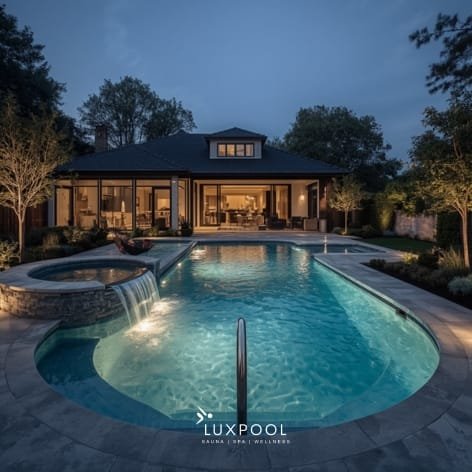
swimming pool design and build process by luxpool

Pool Design to Build Process: A Step-by-Step Guide to Your Luxury Pool

design and build of a pool by luxpool

1: Define Your Vision

Every project begins with a conversation. We take the time to understand how you want to use your pool, the style that suits your home, and any features you have in mind such as an infinity edge, underwater lighting, or a pool house. The more we know, the better we can design a pool that feels truly yours.

2: Choose Your Pool Type & Shape

Luxpool specialises exclusively in Concrete pools the gold standard in luxury pool construction. Unlike fibreglass or vinyl, Concrete pool allows complete freedom of shape, size, and depth, making it ideal for bespoke designs. Whether you want a sleek lap pool, a freeform lagoon, or an architectural masterpiece, we can build it.

3: Site Survey & Planning Permission

Before finalising the design, we carry out a full site survey covering ground conditions, drainage, access, and structural requirements. We also manage all planning checks, permits, and approvals across both the UK and UAE.

4: Design & 3D Visualisation

Our design team creates a detailed 3D render of your pool so you can see exactly how it will look before a single spade enters the ground. We cover pool shape, depth zones, landscaping, lighting, water features, and equipment placement. We refine the design through as many revisions as needed we only move forward once you’re completely happy.

design in 2d and 3d of a pool by luxpool

5: Selecting Materials & Features

All materials are chosen for durability, beauty, and suitability to both UK and UAE climates.

Interior Finishes

  • Ceramic & Porcelain Tiles — hundreds of colours and textures
  • Glass Mosaic Tiles — stunning light reflection and premium finish
  • Pebblecrete / Exposed Aggregate — natural, textured, and slip-resistant
  • Marble Plaster — smooth and luxurious

Coping & Surrounds

  • Natural Stone — limestone, travertine, and sandstone
  • Porcelain Paving — low-maintenance and slip-resistant
  • Composite Decking — warm underfoot, popular in UK gardens

Optional Features

  • Infinity or overflow edges
  • LED underwater and perimeter lighting
  • Water features — jets, waterfalls, fountains
  • Automatic pool covers & heating systems
  • Smart pool controls — manage everything from your phone

6: Groundworks & Excavation

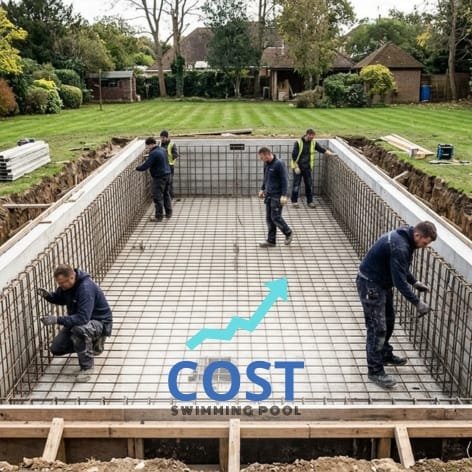
Our team uses specialist machinery to excavate the pool area to precise dimensions, carefully managing soil disposal, utility protection, and site access. In the UK, we’re experienced with clay, rock, and made-up ground conditions. In the UAE, we handle sandy, arid soils and high-water table areas. Once excavated, the site is compacted and prepared for the steel framework.

7: Structural Build & Shell Construction

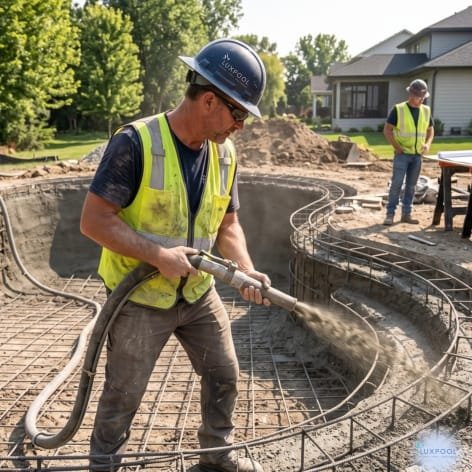
A reinforced steel framework is installed throughout the pool structure, including the walls, floor, steps, and integrated features. High-strength concrete is then carefully poured and formed to create a solid, seamless, and durable pool shell. Once completed, the structure is properly cured to achieve maximum strength and long-term structural integrity, ensuring a pool built to last for decades.

8: Plumbing, Filtration & Electrics

With the shell complete, our specialist teams install all mechanical, plumbing, and electrical systems:

  • Plumbing — circulation pipework, main drains, return inlets, waste lines, and water feature feeds
  • Filtration — high-performance filters, variable speed pumps, and automated dosing integrated with our chlorine-free system
  • Electrics — LED lighting circuits, pump and heating connections, smart controls — all certified to UK and UAE standards

9: Tiling, Coping & Surrounds

Our skilled tiling teams apply your chosen interior finish hand-laid mosaics, large-format porcelain, or natural pebble with precision and care. Coping is fitted in natural stone, porcelain, or composite, fully sealed and finished. The surrounding patio, decking, or stonework is then laid, with planting, lighting, and landscaping integrated to complete the overall vision.

10: Water Treatment, Testing & Handover

Before your first swim, your pool is fully balanced and tested and this is where our chlorine-free pool system comes in.

chlorine free pool system offer by luxppol to its client

The Luxpool Chlorine-Free Pool System

We believe your pool should be as healthy as it is beautiful. That’s why we recommend and install chlorine-free water treatment systems for all our clients across both the UK and UAE. Traditional chlorine causes eye and skin irritation, harsh odours, swimwear bleaching, and unnecessary chemical waste. Our systems eliminate all of that.

Benefits of chlorine free pool result in:

  • No harsh chemicals — safe for children, sensitive skin, and eyes
  • Softer, more luxurious water with no chemical odour
  • Environmentally responsible with significantly reduced chemical waste
  • Lower running costs over time
  • Ideal for UK seasonal pools and UAE year-round swimming

Complete Your Pool with a Quality Pool Cover

A good pool cover is one of the smartest things you can add to your pool. We supply and fit high-quality covers to suit every pool.

  • Keeps the water warm and cuts heating costs
  • Stops leaves and dirt getting in less cleaning for you
  • Keeps children and pets safe when the pool is not in use
  • Reduces water evaporation especially useful in the UAE heat
  • Helps maintain water balance and extends the life of your filtration system

Whether you want a sleek automatic cover or a simple manual option, we will help you find the right fit for your pool.

Complete Wellness Solutions by Luxpool

We do not just build pools. We help you create a full wellness space at home. Alongside your pool, we also design and install saunas, steam rooms, and other relaxation features all built to the same high standard as our pools.

  • Traditional and infrared saunas
  • Steam rooms designed and built to fit your space
  • Full wellness areas combining pool, sauna, and steam
  • Available for both UK and UAE properties

Whether you want a simple sauna beside your pool or a full spa retreat at home, we can make it happen all under one roof.

complete step by step process involve in swimming pool build

Ready to Start Your Journey?

FAQ’s

Q1: How long does it take to build a swimming pool from start to finish?

This is the most common question clients ask. A typical Concrete pool takes anywhere from 10 to 16 weeks depending on the size, complexity, and ground conditions covering design, excavation, shell construction, tiling, and final testing.

Q2: Do I need planning permission to build a swimming pool in the UK?

Most home pools in the UK fall under permitted development and don’t need full planning permission. However, exceptions apply for listed buildings, conservation areas, or pools near boundaries. Luxpool handles all checks on your behalf.

Q3. Why is a chlorine-free pool better than a traditional chlorine pool?

Chlorine-free systems are gentler on your skin, eyes, and hair, have no harsh chemical smell, are better for the environment, and cost less to run over time.

Is Your Pool Water as Clean as You Think? The Chlorine Reality

Is Your Pool Water as Clean as You Think? The Chlorine Reality

Is Your Pool Water as Clean as You Think? The Chlorine Reality a study by luxpool

It’s Not as Simple as “Adding Chlorine”

Most people treat chlorine as a single ingredient. The moment chlorine enters your pool, it splits into two very different chemical forms and only one of them is doing the job you’re paying for.

Hypochlorous acid is the powerful, active sanitiser. It penetrates and destroys bacteria, viruses, and algae efficiently. This is the form you actually want to present in the water.

Hypochlorite ion is the same compound but significantly weaker as a disinfectant. The balance between these two shifts constantly depending on your pool’s pH level. When pH rises even slightly above the ideal range, the ratio tips towards the weaker form, meaning your pool could read perfectly fine on a chlorine test and still be far less effective at sanitising than you think.

This is why pH management is not simply routine maintenance. It plays a major role in water quality and sanitising performance.

Free Chlorine vs Combined Chlorine

Beyond the chemistry of chlorine itself, there are two states in which it exists in your pool at any given moment.

Free Chlorine

It is the active, available sanitiser (HOCl and OCl) working to keep the water clean. This is what you test for and what you need to maintain.

Combined Chlorine

It is also known as chloramines, is something else entirely. When free chlorine reacts with organic matter-like sweat, urine, sunscreen, skin cells brought in by swimmers, it gets consumed and transforms into chloramines. Chloramines are far less effective as sanitisers and are one of the main causes of

  • Red eyes
  • Dry or itchy skin
  • Breath irritation
  • Strong chemical smells

Ideal levels of combined chlorine are essentially zero, below 0.5ppm. In a regularly used pool, levels frequently exceed this without the owner ever knowing.

You will also encounter the term Total Chlorine, this is simply the measurement of free and combined chlorine added together. A high total chlorine reading can actually be misleading. It may look reassuring on paper while a large portion of that figure is made up of inactive, irritating chloramines rather than working sanitiser.

combined chlorine off gasses from the water surface, it transforms into trihalomethanes (THMs)

Problem Extends Beyond the Water

Here is where things become more serious. Chloramines do not stay in the water. They evaporate.

When combined chlorine off gasses from the water surface, it transforms into trihalomethanes (THMs), chemical disinfection by-products (DBPs) formed when chlorine reacts with organic matter such as sweat, urine, and skin cells. In an indoor pool environment, THMs accumulate in the air directly above the water precisely where swimmers, and particularly children, breathe.

Some studies have investigated potential links between long-term exposure to chlorination by-products and respiratory irritation or other health concerns, particularly in poorly ventilated indoor environments. Regular exposure in enclosed pool environments has also been linked to increased asthma risk in children. Beyond the health implications, THMs accelerate corrosion of pool equipment, pipework, metal fittings, and surrounding surfaces silently increasing maintenance and replacement costs over time.

That unmistakable pool smell the moment you walk into an indoor pool? That is not the smell of clean water. That is THMs in the air a signal that the water is chemically imbalanced, not well maintained.

Traditional Solutions and Limitations

The industry has long recognised these problems, and two partial solutions have existed for years.

UV Systems

UV Systems can reduce chlorine demand by 50–80% by breaking down chloramines directly. This is a meaningful improvement and does reduce the smell and irritation but chlorine remains an active part of the treatment cycle and the formation of by-products is not fully eliminated.

Activated Carbon Filtration

Activated Carbon Filtration places a carbon layer over filter media to remove organic matter, chlorine, colour, and odour at the adsorption stage. Again, a useful tool but one that still operates within a chlorine-based framework, treating the symptoms rather than removing the cause.

Both approaches reduce the problem. Neither resolves it at its root.

are salt water pool really a chlorine free

Saltwater Pool Misconception

A significant number of homeowners switch to saltwater pools believing they are leaving chlorine behind altogether. This is one of the most widespread and costly misconceptions in the pool industry.

A saltwater pool generates chlorine on-site through electrolysis. It is, chemically, still a chlorine pool. This means:

  • Chloramine can still form
  • THMs can still develop
  • Chlorine-related by-products are still present

On top of this, the high salt content introduces aggressive corrosion to metal fittings, equipment, and surrounding stonework and surfaces.

It is a different delivery mechanism and still produce chlorine in a different way. A saltwater pool is not a non chlorine pool system.

What Is a True Non Chlorine Pool System?

A genuine non chlorine pool system moves away from the chlorine treatment model entirely. Rather than adding chemicals to react with contamination after it enters the water, advanced alternative systems focus on preventing that contamination from creating a chemical demand in the first place.

Technologies Include:

  • Advanced oxidation
  • Bio-resistant filtration
  • Ozone treatment
  • Mineral-based conditioning

This different fundamentally approach to water treatment focused on improving water quality while reducing chemical dependency.

What This Means for Pool Owners

If you own a pool or are planning to build one the key questions to ask are no longer just “what is my chlorine level?”

Instead, it may be worth asking:

  • What is my combined chlorine level?
  • Is my indoor pool air quality being affected by chloramines?
  • Is my current system treating contamination, or preventing it?
  • Am I maintaining a chlorine pool, a saltwater pool, or a true non chlorine pool system?

FAQ’s

Q1: What is the difference between combined chlorine and free chlorine, and which one should I be monitoring?

Free chlorine is your active sanitiser the part actually cleaning the water. Combined chlorine, or chloramines, is the used-up residue left after free chlorine reacts with sweat, urine, and organic matter from swimmers. Chloramines are inactive, irritating, and the real cause of red eyes and pool smell. Ideal combined chlorine levels should stay below 0.5ppm if yours regularly exceeds this, your water is carrying more of the problem than the solution.

Q2: Is a saltwater pool genuinely chlorine free?

No, this is one of the most common misconceptions in the pool industry. A saltwater pool simply generates chlorine on-site through electrolysis. It still contains chlorine, still forms chloramines, and still produces THMs as disinfection by-products. A saltwater pool is not a chlorine free swimming pool it is a chlorine pool with a different delivery method.

Q3. Are trihalomethane (THMs) only a concern for indoor pools?

THMs form in any chlorine pool, indoors or outdoors. However, the risk is significantly greater indoors because THMs off-gas from the water surface and accumulate in the enclosed air above which is exactly where swimmers breathe. Outdoor pools benefit from natural ventilation, but the formation of THMs in the water remains the same regardless.

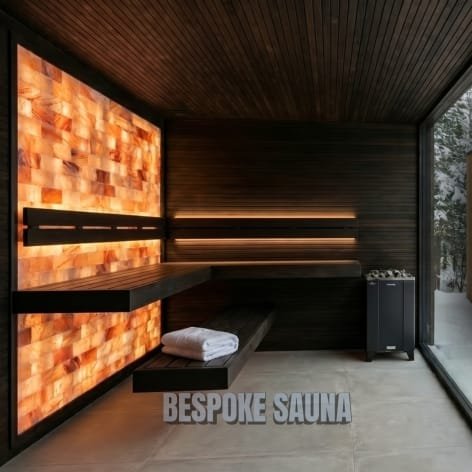
bespoke sauna feature image by luxpool

Bespoke Sauna UK: Custom Indoor & Outdoor Sauna Installation Explained

bespoke sauna built by luxpool

What Is a Bespoke Sauna?

Bespoke sauna is a full custom designed sauna made to fit in your space. Each detail is customised unlike off-the-shelf units to include size and layout, materials, heating system, and general aesthetic.

This will enable you to:        

  • Maximise available space                 
  • Customise interior or brand style.     
  • Select certain features and finishes.  
  • Create a more efficient and comfortable experience            

In short, it is not just a sauna, it’s a personalised wellness environment.

Why Choose a Bespoke Sauna?

the demand for a custom wellness spaces across the UK has grown rapidly, especially in the homes, spa and hospitality settings.

This is why many of them turn to custom-made solutions:

1. Fits in any space perfectly.

A built-in sauna means that your design will fit and flow well in any space, whether a small room indoor or a big one outdoor.

2. Tailored Design & Finish

Minimalism inspired by Scandinavian traditions, or Moroccan interiors bespoke design gives full freedom of creation.

3. Better Performance & Efficiency

A well-constructed sauna enhances the distribution of heat, insulation, and efficiency in energy consumption, which generic units do not usually have.

4. Long-Term Value

A well built saunas will provide lifestyle value and property value particularly in high-end living and commercial properties.

why choose a bespoke sauna benefits define by luxpool

Bespoke Home Sauna: Bringing Wellness Into Your Space

Popular Home Sauna Options:

  • Indoor saunas (bathrooms, basements, spare rooms)         
  • Outdoor garden saunas         
  • Integrated wellness rooms (including steam, showers or plunge pools)

Key Design Considerations:  

  • Space and layout available
  • Ventilation and insulation      
  • Lighting and ambience          
  • Seating design and comfort
  • Heater type (wood-burning or electric)          

The idea is to make a space that you can use on a regular basis and not just a space that looks good.

Bespoke Commercial Sauna: Designed for Performance & Experience

  • Luxury spas   
  • Hotels and resorts     
  • Gyms and wellness centres  

What matters most in Commercial Projects?

  • High usage and strength                
  • Safety standards of compliance and ventilation             
  • Efficient heating systems                  
  • Easy maintenance     
  • Premium appearance and feel for clients    

A well-designed commercial sauna can elevate your brand and set you apart in a competitive market.

Sauna Installation: How Process Works?

Initial Consultation: Knowing your space, goals and preferences.

Design & Planning: Developing a design that is balance in aesthetically appealing, functional and technical requirement.

Material Selection: Selection of quality woods, finishes and heating system.

Installation: Implemented by qualified experts to provide safety and performance.

Testing & Handover: Last minute checks to ensure that everything is working smoothly.

Working with experienced professionals ensures the process run smoothly from start to finish.

Luxpool worker installing and building a bespoke sauna on site

Choosing Right Sauna Builders in the UK

Look for:

  • Proven experience in bespoke projects.                     
  • Strong portfolio of installed projects.                    
  • Knowledge of UK regulations and safety standards.                        
  • Ability to customise, not just supply             
  • End-to-end service (design to installation)    

A specialist sauna builder doesn’t just install a sauna but instead they will assist you to make the correct choice at the very beginning.

Key Features to Consider in Bespoke Sauna

When designing your sauna, small details make a big difference.

  • Materials: Good timber such as cedar or thermo-treated wood is not only more durable, but also enhance the overall experience.
  • Heating System: Electric heaters are commonly used for their ease and reliability now a days new system have introduce, where you can enjoy the classic and infrared heater both in same settings.
  • Lighting: LED mood lighting will be able to change the mood and make the room more welcoming.
  • Controls & Technology: The digital controls, timers and even app operation can be added to modern saunas.

Additional Features:

  • Glass windows to a modern appearance.     
  • Integrated sound systems                 
  • Aromatherapy options                       

Indoor vs Outdoor Bespoke Saunas

Both options have their advantages, but it really depends on the space and lifestyle.

Indoor Saunas:

  • Easier access year-round                
  • Seamlessly integrated into your house.             
  • Ideal for smaller spaces        

Outdoor Saunas:

  • More design flexibility                        
  • Unique, spa-like experience              
  • Fabulous in gardens or leisure places.

A tailored approach allows you to make the most of either options.

outdoor sauna and indoor sauna by luxpool

Conclusion

From bespoke home sauna designs to bespoke commercial sauna installations, the right approach combines thoughtful design, quality materials, and expert craftsmanship.

If you’re considering a sauna, working with a experienced sauna builders ensures you get a result that not only looks exceptional but performs reliably for years to come.

Ready to Create Your Bespoke Sauna?

FAQ’s

Q1: How long does it take to install a bespoke sauna?

Most installations take a few days to a few weeks, depending on the size and complexity.

Q2: Is a bespoke sauna worth it compared to a pre-built sauna?

Yes. It fits your space better, looks more refined, and performs more efficiently over time.

Q3. What type of wood is used for saunas in the UK?

Common choices include cedar, spruce, and thermo-treated wood. These are durable, handle heat well, and create a comfortable sauna environment.

chlorine free swimming pool

How to Convert Your Pool to a Chlorine-Free Swimming Pool

How to Convert Your Pool to a Chlorine-Free Swimming Pool

And, in case you are thinking of making the change, you should know the following.

Why Many People Are Moving Away from Chlorine

Chlorine has been used over the years to maintain the safety of pools, but it has its known disadvantages. Reaction with sweat, oils, and other contaminants results in chloramines. These cause the intense smell in the pools, and other frequent irritants like red eyes and dry skin.

All these effects are not just associated with swimming but are a direct consequence of the chemicals that are being applied to the water.

This could be eradicated in a system that does not have chlorine, and this will offer a more natural, comfortable, and better swimming experience.

Traditional Chlorine Pool

•  Harsh chemical smell
•  Irritates eyes and skin
•  Fades swimwear and hair
•  Chloramine byproducts
•  Environmental impact
•  Frequent chemical dosing
Luxpool Mineral Water Pool

•  No chemical odour
•  Gentle on eyes and skin
•  Preserves hair and swimwear
•  Zero harmful byproducts
•  Eco-friendly and sustainable
•  Pure mineral water quality

A Better Way to Navigate: Mineral Water Systems

The modern mineral water systems use an alternative path in ensuring that the water is of good quality. This method does not include chlorine, but a combination of filtration, biological treatment, and utilizing minerals as one of the means of keeping the water clean and balanced.

What comes out is a soft and more natural feeling of water with no harsh side effects of chemical sanitization.

Properly designed systems have the ability to sustain extremely good quality water standards, which give sustainability of water that is clear, stable, and enjoyable for swimming.

Benefits of a Chlorine-Free Pool

Replacing the chlorine pool with a chlorine-free pool can have a variety of apparent benefits:

Greater comfort – Nothing to sting the eyes or the skin. The water is soft, and swimming is enjoyable as well.

Reduced chemical exposure – In the absence of chlorine, there will be no chloramines or pungent odors, which implies that there will be fewer effects on hair, skin, and swimwear.

Lower environmental impact – Reduced chemicals and consequently reduced waste and run off, hence a more viable choice.

Suitable for sensitive users – Mineral-treated water is usually more comfortable for those who are allergic, have asthma, or have skin problems.

A more natural feel – Many find that the water is much softer and purer, just like a natural spring.

Adds property appeal – The absence of chlorine in the pool would be considered a luxury that can be appreciated by people, in particular those who appreciate wellness and sustainability.

Converting Your Pool: Step-by-step

In the majority of cases, an existing pool can be reused without a lot of structural work. It is usually accomplished by:

1.   Initial assessment

To make the correct choice, a specialist examines your pool and the quantity of equipment, size, and condition of water you possess.

2.   System design

An individualized solution is ordered to fit your pool and your usage.

3.   Phasing out chlorine

Reduction in the use of chlorine is slowly done so that the levels abate safely until the new system is installed.

4.   Installation

The mineral treatment system is installed in addition to the existing filtration system. This is normally simple and does not bring much disturbance.

5.   Water balancing

The water is adjusted to the correct pH, alkalinity and mineral content.

6.   Testing and handover

Last verifications are done to ensure the system is up and running and then directions are issued for the day-to-day care.

Most of the cases do not require the draining of the pool, and this makes the process to be easily attained and effective.

converting chlorine to a mineral water by luxpool mineral water system

Ongoing Maintenance

Another benefit of a chlorine-free pool is that it is easy to maintain.

Routine treatment is typically focused on a regular chemical dose:

  • Monitoring and ensuring balanced water levels.
  • Keeping the pool clean by clearing it of trash.
  • Servicing the system components when required

Many owners spend less time in pool care due to the reduced number of chemicals it contains.

Who Benefits Most?

Although a chlorine-free pool is appropriate in most households, it can be very useful for:

  • Families with young children, and possibly more susceptible to chemicals.
  • Patients with skin problems, e.g., eczema or dermatitis.
  • Individuals who may have an allergy to or asthma, which could be caused by chlorinated water.
  • Homeowners who want something more high-end, wellness-oriented experience.

Final Thoughts

Replacement of chlorine from the swimming pool is a viable renovation that can assist you immensely to improve the appearance, feel and administration of your swimming pool.

It not only reduces the use of chemicals but also makes the environment natural and delightful, which people would wish to use.

FAQ’s

Q1: Is a chlorine-free pool safe?

Yes, with the right installation and maintenance, such systems should be able to ensure water is clean and safe with non-chlorine treatment methods.

Q2: Can an existing pool be converted?

In most cases, yes. Most of the systems are compatible with commonly available pool infrastructure.

Q3. How long does conversion take?

Installation is usually completed within a couple of days, and the water stabilizes in the next one to two weeks.

Q4. Will the water still look clear?

Yes. In fact, some people think that the water is even clearer than it is when the byproducts are used in chlorine.

Q5. Is maintenance complicated?

No, continuous care tends to be less complicated and less reliant on the use of chemicals to provide equilibrium.

himalayan salt brikcs vs tiles by luxpool

Himalayan Salt Bricks: Benefits, Uses, and Why They Are Popular in UK Wellness Spaces

Himalayan salt bricks benefits by luxpool

One material that has gained increasing attention in wellness design is the Himalayan salt brick. They add both visual appeal and functionality. The sauna salt walls have an organic appearance, and the dry aging salt rooms (in restaurants) are a distinctive feature increasingly used in hospitality environments. Himalayan salt installations combine natural beauty with practical use. Today, we will help you explore Himalayan salt bricks, how you can use them, and why they have become such a popular addition to modern spaces everywhere.

What Are Himalayan Salt Bricks?

Himalayan salt bricks are solid blocks of natural rock salt. They come from ancient salt deposits in the Himalayan region. These deposits formed millions of years ago when prehistoric oceans evaporated, leaving behind large layers of mineral-rich salt crystals. Over time, because of the trace minerals such as potassium, magnesium, and iron, these crystals developed the distinctive pink and amber hues.

However, to turn this into a decorative piece, the Himalayan salt blocks are cut and shaped into different variety of pieces. Because each brick has a slightly different texture and shade, every salt wall installation becomes unique. People nowadays use Himalayan salt bricks in:

  • spa and wellness centres
  • sauna salt walls
  • salt therapy rooms
  • luxury interior design features
  • restaurant dry aging rooms

Their soft colour palette and unique visual texture make them the perfect choice if you want to create a relaxed space.

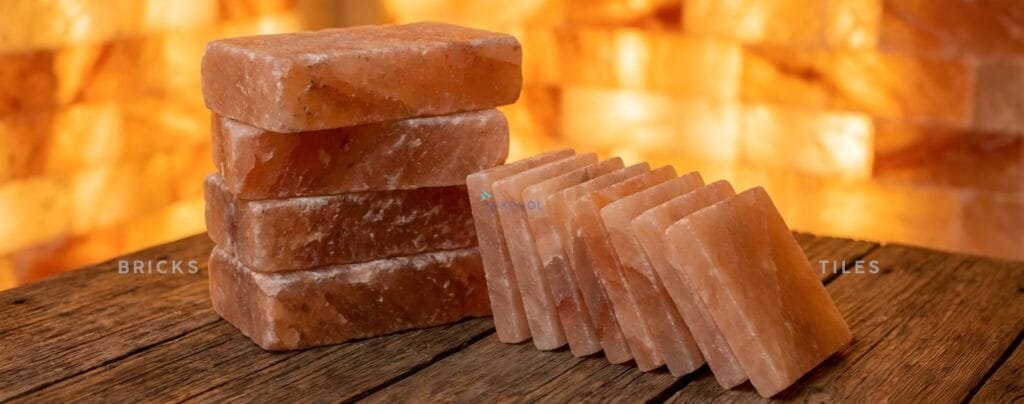
himalayan salt brikcs vs tiles by luxpool

Himalayan Salt Tiles vs Himalayan Salt Bricks

Although they come from the same natural salt deposits, Himalayan salt tiles and salt bricks are slightly different;

Himalayan Salt Bricks

The salt bricks are thicker in size and heavier, and you can construct full salt walls with them. They create a strong appearance, and you can use them in spas, saunas, and wellness centres.

Himalayan Salt Tiles

Benefits of Himalayan Salt Brick Walls

Himalayan salt walls are particularly popular in spa architecture because they combine natural materials with ambient lighting (two elements commonly used in wellness-focused design). They are also widely valued for their visual appeal and the atmosphere they help create in wellness environments.

Calming Ambient Lighting

One of the most attractive features of Himalayan salt bricks is how they interact with light. When you add warm LED lights, the salt crystals produce a soft amber glow that creates a relaxing atmosphere. You can often notice this in spas and meditation spaces.

Unique Natural Design

Every salt brick varies in colour and texture. This natural variation makes every salt wall visually pleasing and unique in modern wellness architecture.

Wellness-Focused Environment

Salt has long been associated with wellness environments such as salt therapy rooms and halotherapy spaces. Natural materials and warm lighting are commonly used in wellness architecture to create environments that encourage relaxation.

Premium Interior Feature

When it comes to luxury spas, hotels, and home wellness spaces, Himalayan salt walls are a statement design piece because they enhance the overall experience.

sauna salt wall by luxpool in sauna

Sauna Salt Walls: A Growing Wellness Trend

Sauna salt walls are popular for several reasons:

  • Creates a spa-like sauna experience.
  • It adds visual warmth to the sauna interior
  • It enhances the overall design of the space
  • It provides a unique feature for luxury saunas

Many modern home saunas and commercial wellness facilities now include Himalayan salt walls as a part of their design.

Dry Aging Salt Rooms for Restaurants by luxpool

Dry Aging Salt Rooms for Restaurants

  • Premium beef cuts
  • Steak aging
  • Specialty restaurant meat displays

Not only are the dry aging salt rooms visually pleasing, but they offer a functional feature as well.

Himalayan Salt Bricks Use

Nowadays, people use Himalayan salt installations in both wellness and hospitality spaces. For example, you can notice them in:

Spa and Wellness Centres – Salt walls create a relaxing feeling in spa treatment areas and relaxation rooms.

Luxury Home Saunas – Many homeowners install sauna salt walls to bring spa-style wellness into their homes.

Salt Therapy Rooms – Some wellness centres design full salt therapy spaces using Himalayan salt bricks.

Yoga and Meditation Studios – The warm lighting creates calm spaces for mindfulness and relaxation.

Restaurants – Dry-aging salt rooms allow restaurants to age and display premium meat in controlled environments.

Hotel Wellness Areas – Luxury hotels often use salt walls as a distinctive design feature in spa facilities.

How To Install Himalayan Salt Walls

Installing a Himalayan salt wall requires careful planning and proper structural support. Typically, first you need to prepare a support frame or structure. The salt bricks are then arranged within the frame and secured using mounting systems designed specifically for salt installations.

If you want to enhance the natural colours of the salt, then install lights behind the bricks (the best options would be warm LED lights). In professional spa and sauna projects, salt walls are typically installed by specialists to ensure structural stability, proper ventilation, and safe integration of electrical lighting.

Why Himalayan Salt Walls Are Popular in the UK

  • They are natural materials
  • They pair perfectly with warm ambient lighting
  • They deliver a distinctive visual feature
  • They are used in wellness-focused environments

Himalayan salt walls create memorable spaces that feel both natural and luxurious.

FAQ’s

Q1: What are Himalayan salt bricks used for?

Himalayan salt bricks are used to build salt walls in spas, saunas, salt therapy rooms, wellness centres, and restaurant dry aging rooms.

Q2: What is the difference between Himalayan salt bricks and Himalayan salt tiles?

Salt bricks are thicker blocks mostly used in wellness space, while Himalayan salt tiles are thinner and mainly used as cooking and serving food.

Q3. What is the difference between Himalayan salt bricks and Himalayan salt tiles?

Salt bricks are thicker blocks mostly used in wellness space, while Himalayan salt tiles are thinner and mainly used as cooking and serving food.

Q4. Can you use Himalayan salt bricks in saunas?

Yes. When properly installed with appropriate ventilation and lighting, Himalayan salt bricks can be used to create sauna salt walls.

Q5. What is a dry aging salt room?

A dry-aging salt room is a temperature-controlled space lined with salt bricks or tiles where people age premium meats (to enhance flavour and texture).

Q6. Do Himalayan salt walls require maintenance?

Salt walls generally require minimal maintenance, but you should install them correctly with proper airflow and lights to achieve long-term durability.

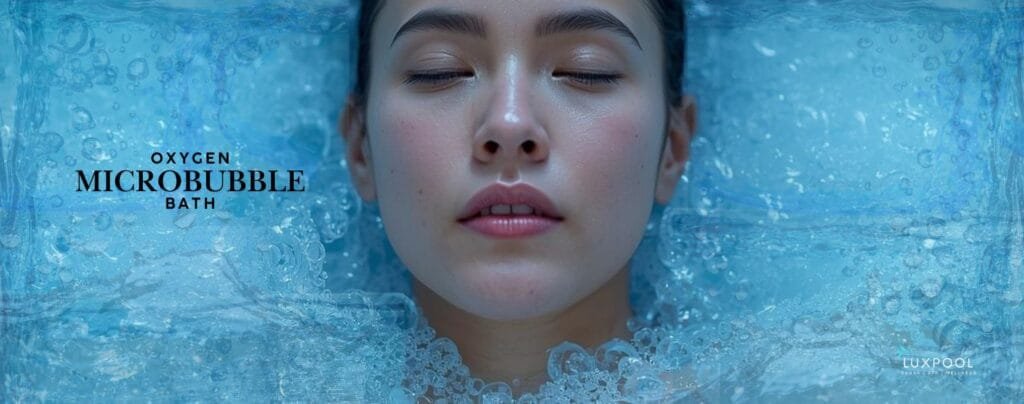
oxygen microbubble bathtub by luxpool for skin hydration and relaxation

Oxygen Microbubble Spa: The Ultimate Luxury Bathing Experience

oxygen microbubble bathtub by luxpool for skin hydration and relaxation

What is an Oxygen Microbubble Spa?

An Oxygen Microbubble Spa is not your ordinary bathing tub. It’s a high-tech bathingsystem that infuses water with ultra-fine oxygen bubbles. These microbubbles are so small that they remain suspended in the water, creating a smooth feel that’s soothing and gentle on the skin.

This system combines luxury, wellness, and advanced technology, turning your bath into a full-body spa session.

How Does It Work?

  • Oxygen Infusion: The spa enriches water with pure oxygen, which make it feel soft, silky and light on your body.
  • Microbubble Formation: Millions of tiny bubbles form, surrounding your body for a weightless sensation.
  • Enhanced Skin Contact: Oxygen microbubbles penetrate the skin surface gently, helping hydrate and cleanse.
  • Silent Operation: O3 pool spa system is quiet and unobtrusive, creating a calm, meditative environment.

Key Benefits

The Oxygen Microbubble Spa offers more than relaxation. Some of the main benefits include:

  • Deep Hydration & Skin Softening: Microbubbles improve moisture retention and leave skin feeling refreshed.
  • Gentle Cleansing: Removes impurities without harsh chemicals.
  • Stress Relief & Relaxation: The soft, oxygen-rich water calms the nervous system and soothes muscles.
  • Luxury Spa Experience at Home: Provides a premium wellness session without visiting a spa.
hydrate your skin through luxpool oxygen microbubble bathtub and spa

Why Choose an Oxygen Microbubble Spa Over a Regular Bathtub?

  • Ordinary baths can hydrate temporarily, but the oxygen and microbubble systemenhances skin absorption and delivers a wellness effect.
  • Unlike regular tubs, the spa provides a gentle floating sensation, reducing joint pressure and improving comfort.
  • Ideal for home wellness enthusiasts, spa owners, and luxury interior setups.

Tips for the Best Experience

  • Session Duration: 20–30 minutes is optimal for hydration and relaxation.
  • Temperature: Room temperature water enhances oxygen absorption and comfort.
  • Maintenance: Most systems require minimal upkeep, and oxygen infusion reduces the need for any chemicals.
  • Relaxation Rituals: Pair with calming music or aromatherapy to enhance the spa experience, and enjoy the built-in Chromolight therapy, which uses soothing colours to relax your body and mind.

Who Should Try It?

The spa is perfect for:

  • Anyone focused on skin health and hydration
  • People seeking stress relief and muscle relaxation
  • Homeowners wanting a luxury wellness upgrade
  • Professionals or wellness clinics looking for a premium bathing solution

Conclusion

FAQ’s

Q1: What is an Oxygen Microbubble Spa?

An Oxygen Microbubble Spa is a wellness bathing system that infuses water with millions of ultra-fine oxygen bubbles. These microbubbles create a soft, milky bath that helps cleanse, hydrate the skin, and promote relaxation.

Q2: How does an Oxygen Wellness Bath work?

An Oxygen Wellness Bath works by generating tiny oxygen-rich bubbles in the water. These bubbles gently interact with the skin, helping improve hydration, enhance cleansing, and provide a soothing spa-like bathing experience.

Q3. What are the benefits of a Microbubble Therapy Bath Tub?

A microbubble therapy bath tub can help:
– Deeply hydrate and soften skin
– Remove dirt and impurities gently
– Improve relaxation and reduce stress
– Support overall wellness and comfort during bathing

Q4. Is an Oxygen Microbubble Spa better than a regular bathtub?

Unlike a regular bathtub, an Oxygen Microbubble Spa uses advanced technology to create oxygen-rich microbubbles that enhance the bathing experience, offering additional skin and relaxation benefits.

Q5. What is Chromolight therapy in a spa bath?

Chromolight therapy uses coloured LED lights to create a calming atmosphere during bathing. Different colours can help relax the mind, improve mood, and enhance the overall wellness experience.

The World’s First Swimming Pool and How Pool Design Has Evolved

The World’s First Swimming Pool and How Pool Design Has Evolved

The World’s First Swimming Pool and How Pool Design Has Evolved

World’s First Swimming Pool

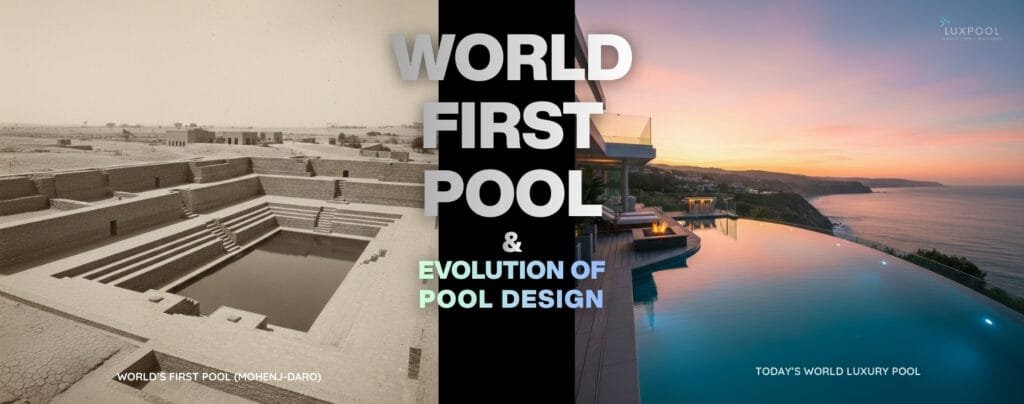
The earliest known swimming pool was around 2600 BCE in Mohenjo-daro, in what is now Pakistan. Known as the Great Bath of Mohenjo-daro, it was a large brick-lined pool used for communal bathing and rituals.

What made it remarkable:

  • Waterproofed with bitumen to hold water
  • Simple overflow system for circulation
  • Served hygiene and social purposes

Even thousands of years ago, the principles of swimming pool design durability, water circulation, and social enjoyment were clear.

Swimming Pools in Ancient Civilisations

The Roman Empire took pools to a new level. Public baths became cultural hubs, showcasing engineering, luxury, and leisure.

Key innovations included:

  • Heated floors using hypocaust systems
  • Water supplied via aqueducts for circulation
  • Ornamental pools in private villas for status and relaxation
Luxpool Blog Main Image (1)

Pools Through the Ages

After the Roman Empire, pool construction declined in Europe, but water features remained popular in decorative gardens. During the Renaissance, pools returned to private estates, focusing on symmetry, reflection, and aesthetic appeal.

By the 19th and 20th centuries, public and private pools became common:

  • Rectangular lap pools for exercise
  • Freeform leisure pools for relaxation
  • Plunge pools for small spaces

Systems during this era included:

  • Manual cleaning and basic pumps
  • Chlorine filtration for hygiene
  • Simple heating methods

Pools were becoming safer, more enjoyable, and more accessible but still required considerable maintenance.

Modern Pool Design

Popular designs:

  • Infinity pools with stunning visual effects
  • Geometric and freeform pools
  • Wellness pools with spa, hydrotherapy, or massage jets

Modern pool systems:

  • Pumps, heaters, and chemical dosing in earlier modern pools
  • Smart systems today: Chemical free systems, automated filtration, temperature control, lighting, and remote monitoring

Benefits of smart pools:

  • Easier maintenance and monitoring
  • Energy efficiency and sustainability
  • Improved water quality and safety
  • Enhanced wellness-focused experience

Luxpool: Combining History and Innovation

Luxury pools today are the result of thousands of years of innovation. At Luxpool, we combine:

  • Bespoke designs inspired by historical and contemporary styles
  • Smart pool & chemical free systems for easy control and efficient operation
  • Wellness-focused features, including hydrotherapy and spa options

Every Luxpool creation isn’t just a pool it’s a space for relaxation, luxury, and modern innovation.

Conclusion

FAQ’s

Q1: What was the world’s first swimming pool?

The Great Bath of Mohenjo-daro (around 2600 BCE) in Pakistan is the earliest known pool, used for communal bathing and rituals.

Q2: Who built the first swimming pools?

Early pools were created by the Indus Valley civilisation and later refined by the Romans with advanced engineering and luxury designs.

Q3. How have swimming pool designs evolved over time?

Pools evolved from simple communal baths to Roman public baths, Renaissance ornamental pools, and today’s infinity, wellness, and smart pools.

Q4. What systems did early swimming pools use?

Early pools used natural water circulation and overflow systems. Modern pools gradually introduced pumps, filtration, heating, and now smart technology.

Q5. What makes a modern smart pool different?

Smart pools automate filtration, temperature control, lighting, and monitoring. They reduce maintenance, improve water quality, and create a luxury wellness experience.

Luxpool sauna fire suppression system in uk

Sauna Fire Suppression Systems: Ultimate Safety in Contemporary Wellness

sauna fire suppression system by luxpool

Typical Fire Hazards in Wellness Areas and Saunas.

Understanding the risks helps explain why the suppression system matters.

Common fire hazards are:

  • The cause could be overheating or defective heaters in the sauna.
  • Control panel or wiring electrical faults.
  • Poor ventilation resulted in heat accumulation.
  • Timber surfaces are exposed to prolonged high temperatures.
  • Poor installation or DIY alterations.

These dangers increase in small, enclosed areas or basement fittings, where heat and smoke can spread rapidly.

What is a Sauna fire suppression system?

A fire suppression system is an automatic safety system designed to detect and control fires at the initial stage. Suppression systems are responsive, unlike regular smoke alarms, which do not respond but respond directly to the source of the risk.

These systems are designed to operate in a high-temperature, high-humidity environment with timber interiors in the sauna, without causing damage to the sauna or interfering with normal operations.

How Sauna fire suppression systems operate.

Here’s the basic idea.

  • The sauna area is monitored by a heat/fire detecting element.
  • The system automatically activates when temperatures exceed safe levels or when fire is detected.
  • An extinguishing agent is controlled and emitted on the heater or ceiling region.
  • Before the fire spreads, it is put out.

The majority of the systems do not require an electric supply but use pressurised cylinders or thermal triggers. That makes them reliable even in the event of a power failure.

types of sauna fire suppression system

Fire Suppression System in Saunas.

Not every fire suppression system is suitable for saunas. The most popular ones are:

Clean Agent Systems

These contain non-toxic, residue-free agents that do not damage timber or electrical parts and that suppress fire.

Water Mist Systems

Fine water particles extinguish the fire quickly and with minimal water, minimising steam shock.

Dry Chemical Systems

Good, but less popular in saunas due to the cleanup and the potential damage to finishes.

The most efficient fire suppression system in saunas.

The most appropriate system is determined by the type of sauna, size, and location. But in higher-end residential and commercial projects, clean-agent suppression systems are often considered the most appropriate choice.

They offer:

  • Fast activation
  • No residue
  • Little disturbance of the sauna structure
  • Fitting in with high-end wellness areas.

Experienced sauna builders in the UK assess heater output, room size, and ventilation before recommending a system.

Installation of Fire Suppression System (Overview).

In a professional sauna project, fire suppression is an integrated part of the overall safety design.

  • Checking the site and risk analysis.
  • System selection based on sauna layout and heater type.
  • Installation of suppression nozzles and sensors.
  • Linked to the existing sauna controls where needed.
  • Final testing and certification.

Specialist wellness contractors like Luxpool are more regulation-conscious and follow a systematic process to ensure the system functions seamlessly with the sauna without interfering with the product’s performance or appearance.

Is it possible to add Fire Suppression to an Existing Sauna?

Yes. Retrofitting existing saunas with fire suppression systems is possible in most cases.

Retrofitting is common in:

  • Older commercial saunas
  • Home saunas are made to meet standards or insurance requirements.
  • Enclosed wellness areas or a basement.

A professional evaluation is mandatory to ensure a compatibility with the existing heater, ceiling height and ventilation. With proper design, retrofitting requires very little modification to the sauna’s interior.

Sauna fire safety regulations and compliance in the UK.

Sauna fire safety in the UK is governed by a combination of building regulations, fire safety legislation, and industry standards.

Key considerations include:

  • Compliance with Building Regulations on fire safety.
  • Commercial premises fire risk assessment.
  • Heaters and controls electrical safety standards.
  • Local authority and fire officer requirements for spas and gyms.

They are not necessarily legally obligatory, but in the UK, insurers or professional sauna builders frequently require them or advise them, especially in high-occupancy spaces or those used by the general public.

Luxpool role in sauna fire suppression system

Professional Sauna Builders Role.

This ensures:

  • Correct system sizing
  • Regulations and compliance.
  • Clean, concealed installation.
  • Long-term reliability

The collaboration with the knowledgeable specialists also minimizes the time of approvals and prevents the implementation of the changes that cost a lot of money.

The reason why fire safety should be included in all saunas.

The right type of sauna is not only concerned with heat and materials. It is about peace of mind.

Adding fire suppression:

  • Protect people and property.
  • Conserves quality timber interiors.
  • Supports insurance and regulatory needs.
  • Future proofs your wellness investment.

In modern wellness spaces, safety and luxury go hand in hand.

Final Thoughts

With the trend of increasing sauna installations in the UK, fire suppression systems are becoming standard rather than an upgrade. Whether you are designing a new wellness facility or upgrading an existing sauna, one of the best choices is to integrate fire safety into the design.

* Too busy to read? Watch the video for a brief overview of the blog’s key points *

FAQ’s

Q1: Does a fire suppress system have to be installed in a sauna in the UK?

It is reliant on the location, use and assessment of risk of the sauna. A commercial sauna will need one much more often, particularly the insurance and compliance purposes.

Q2: Will it ruin the interior of my sauna with a fire suppression system?

Contemporary systems are aimed at minimisation of the impact. Clean agent and water mist systems do not harm timber and electrical parts when installed appropriately.

Q3. Does this fire suppression system support any sauna heater?

Most systems are compatible with electric sauna heaters. Compatibility should always be confirmed by professional sauna builders before installation.

Discover how swimming pool design and build in uk can influence property value, lifestyle appeal, and buyer interest.

Swimming Pool Design and Build: Does a Pool Really Increase Property Value?

does swimming pool increase property value by luxpool

What Is Swimming Pool Design and Build?

Design and build of swimming pools is not only about construction. It is all about building a pool that fits your property, your lifestyle, and how you are going to use it in the long run.

Good design takes into consideration space, layout, structure, safety, and usability. A pool that is perfectly constructed seems to be part of the house rather than an add-on. That difference matters more than many people realise, especially when it comes to value.

Do Swimming Pools Add Value to UK Properties?

In the UK, a swimming pool doesn’t automatically increase value in every case. But a well-designed and professionally built pool often makes a property more attractive, particularly in the mid to high-end market.

Buyers increasingly see pools as a lifestyle feature rather than a luxury extra. Homes with thoughtfully designed pools tend to stand out, attract more interest, and create a stronger first impression. In many cases, that translates into better market appeal and stronger resale potential.

Upgrade to lifestyle and wellbeing

The value of property is not all

The presence of a swimming pool in the house promotes low-intensity exercise that is consistent and age-appropriate. Swimming helps to keep the heart healthy, enhance flexibility, and is not rough on the joints. In addition to fitness, pools provide stress-busters, relaxation and a sense of daily escape.

A pool facilitates shared time with families. To individuals, it becomes a personal wellness area. These lifestyle advantages can be as valuable as resale value, even more.

Importance of Design and Build Quality

Here’s the thing, not all pools are equal

The design, inappropriate type of the pool or immediate construction options may result in increased maintenance, usability problems or decreased attractiveness. On the other hand, a properly designed pool will have more age, work more effectively, and will be more desirable in the long run.

This is where experience comes in.

Pool Upgrade to lifestyle and wellbeing

Support of Swimming Pool Design and Build by Cullinan-UK

Cullinan-UK have almost twenty years of experience in the UK market, which translates into every design decision.

We understands:

  • What are the right pool designs on which properties?
  • Which kind of pool fits your area and lifestyle?
  • What are the construction techniques that have the longest pool shell life?
  • The question of the balance of aesthetics, durability, and usefulness.

Instead of following trends, the focus is on recommending the right pool for your property, based on experience and knowledge and long-term performance. The outcome is a right looking pool, works well, and continues to add value years down the line.

Cost vs Value

Admittedly, constructing a pool is not cheap. However, it is viewed by many homeowners as a combined investment:

  • In their property
  • In their lifestyle
  • In their wellbeing and health.

Final Thoughts

The right design, the right build quality and the right guidance can make a pool add value to your property, help your wellbeing, and make your home shine in all the right ways.

FAQ’s

Q1: Does a swimming pool really add value to a property in the UK?

A well-designed and professionally built swimming pool can add value. It also improves desirability, helping properties stand out in the market.

Q2: What type of swimming pool is best for long-term value?

Pools built with durable structures, quality finishes, and efficient systems tend to perform better over time. The right choice depends on your property and how you plan to use the pool.

Q3. Is a swimming pool expensive to maintain?

Maintenance costs vary, but modern swimming pool design and build focuses on efficiency and ease of use. With the right setup, upkeep can be straightforward and manageable.

Q4: Is investing in a swimming pool worth it in the long run?

For many homeowners, yes. A pool offers lifestyle enjoyment, wellbeing benefits, and added property appeal, making it a long-term investment rather than just an expense.

Q5: How do I know which pool design suits my property?

Our experienced design and build team assess your space, lifestyle, and long-term goals to recommend a pool that fits naturally and adds lasting value.

Luxpool blog Feature image of tyoes of pool

Concrete Pool or One-Piece Pool; Which is the Better?

Concrete Pool or One Piece Pool; Which is the Better?

Types of Pools.

Concrete Pools

The concrete pool is constructed on site using reinforced concrete. This is the free-form pool method with complete freedom of form, size and depth, which is why it is the preferred option of luxury pool builders and homeowners who desire a complete bespoke design.

High end options with concrete pools are marble, mosaic tiles or natural stone and can be infinity edged, sun shelves or inbuilt spa.

They suit best in the properties that require customized applications, difficult topography, or architectural integration, which is where the swimming pool builders like Luxpool are truly at their best.

One-Piece Pools

a. Fibreglass One-Piece Pools

Fibreglass pools are composed of fibreglass resin-coated that has a gelcoat surface. They are portable, easily installed, and their surface is low-maintenance and smooth.

Nonetheless, they have certain disadvantages:

  • The liner to the pool also may fade or crack or even chip with time, particularly under the influence of the UV or bad chemistry in the water.
  • One-piece are restricted to pre-shaped and pre-sized forms hence less freedom in design.
  • Repairing is a difficult task and is noticeable when refined.
  • Fibreglass one-piece pools are preferred when the client is more interested in speed and simplicity rather than in design.

b. One-Piece Pools made of Stainless Steel.

Pros:

  • Rigid but lightweight material.
  • Resistant to corrosion and strong when well looked after.
  • Premade design is easily installed.

Cons:

  • Very costly as compared to fibreglass or concrete.
  • Limited shapes and sizes.
  • Scratches or water stains can be on reflective surfaces.
  • Can rust unless high marine grade Stainless steel is used
  • Cut into multiple pieces for site access 

Stainless steel pools look different, as they are a modern finish, but they do not give them the same design freedom and integration as concrete pools.

Key Comparison Table

FactorConcrete PoolFibreglass One-Piece PoolStainless Steel One-Piece Pool
Flexibility in DesignComplete customisabilityRestricted to mouldsRestricted to factory forms
Installation Time6–8 weeks2–3 weeks2–4 weeks
SturdinessVery tough, long-lastingSurface may fade, crack, or chipStrong but can scratch
MaintenanceSimple cleaning and easy refinishingLow maintenance, difficult to repairEasy cleaning but may leave marks
AestheticsEndless design options (tiles, stone, marble)Smooth contemporary appearanceSleek, metallic appearance
CostHigher initial cost, long-term valueLower cost, shorter lifespanHighest total cost
Lifespan15 years5 years7 years
types of pool by luxpool

Why Concrete Pools Stand Out

As the foremost swimming pool builders and swimming pool installers at Luxpool, we have observed that concrete is the surest and aesthetics-oriented product to consider when owning a home in the long term.

Here’s why:

Complete Design Liberty: Concrete pools are constructed to any shape, size or depth, perfect when properties have complicated layouts, or when a custom landscape is required.

Limitless Finishes: Select premium materials such as natural stone, porcelain or glass mosaics.

Durability: Reinforced waterproof concrete pools are durable and have a life of decades without much structural problem.

Architectural Integration: Concrete has been able to integrate perfectly with patios, terraces, and landscaping which are very important regarding the amenities of a modern living.

Personal Touches: Infinity edges, steps, LED lighting and spa areas – anything can be built and install in a concrete pool.

Concrete cannot be compared to other materials when it comes to craftsmanship, elegance and value among the clients who seek these aspects.

When a One-Piece Pool is to be considered.

We do understand that one-piece pools may be the right choice with some clients.

You could think of a one-piece pool when:

  • You want a pool to be installed fast.
  • You have got a small-medium budget to work with.
  • You don’t mind ordinary shapes and sizes.
  • You want minimal surface finishing or tiling work.
  • You don’t want much customization.
  • You don’t need long-lasting.

The reasons why Concrete Pools.

Luxpool being the experts in the construction of swimming pools in the UK and have won the multiple awards in pool industry in UAE and UK, we design and construct a concrete swimming pool, which is custom-made to your property and lifestyle. Our design-and-build project comprises all phases including architectural plans and 3D designing, swimming pools construction and completion.

We specialize in production of not only functional but also beautiful pools, which is a long-term investment, which brings beauty and value to your home.

Concrete pool is not simply a place of swimming but luxurious, skilled and individual construction of your swimming pool vision and dream.

Conclusion

Luxpool is a blend of architecture and professional pool construction that produces the result based on your lifestyle and the improvement of your home. This begins with designing your swimming pool in 2D and 3D that provides you with a clear picture of how it is going to appear. After you are completely satisfied with the design we proceed to construction. We do it all in one roof, the initial design idea to the last construction would be your one point of contact.

* Too busy to read? Watch the video for a brief overview of the blog’s key points *

FAQ’s

Q1: Which is better between concrete and one-piece pool?

Concrete pools are longer lasting, personalised, and elegant whereas the one-piece pools are less expensive and faster to set up but not very flexible and reliable.

Q2: What is the main difference of concrete, fibre-glass and stainless steel pools?

Concrete: premium, long, homogeneous finishes. Fibreglass: readymade, quick, restricted design. Stainless steel: recent, powerful, costly, restricted forms.

Q3. How long it will take to install a concrete pool as opposed to installing a one-piece pool?

Concrete pools: (6-8 weeks), One-piece fibre glass or steel pools (2-4 weeks) – factory time is not considered.

Q4: Why are luxury homeowners prefer concrete pools?

Concrete pools are the best choice because they have complete design, superior finishes and last long hence are suited in luxury houses and are fully customised.

pool condensation and dehumidfication. how this process work a complete guide by luxpool

Indoor Pool Condensation: The Cause, Risk and Effective solutions for Pools

Indoor Pool Condensation The Cause and Risk and Effective solutions to Pools

What Is Condensation in an Indoor Pool?

When hot, damp air is in contact with a cooler surface, condensation takes place. The wetness of the air at the time transforms into a water droplet similar to fogging a cold window.

The persistence of the evaporation of the surface of a swimming pool on an indoor or a basement swimming pool room is very high thus making it very humid. This moist air condenses when it comes into contact with any material which is below its dew point (which is typically glass, concrete, or metal).

In the long run, this causes mould, corrosion, peeling of the paint, structural deterioration, and unfavourable indoor climate.

Why Indoor Pools in the UK are so Exposed

The tight insulation and the little ventilation that is done in the UK homes are usually meant to dominate the heat which is a great way of conserving energy but not handling moisture.

Typical UK challenges are:

  • External walls and glazing in winter are colder, and this raises the risk of condensation.
  • Poorly ventilated underground or basement pools.
  • Retrofit projects in which the humidity was not initially planned to be controlled in pool rooms.
  • Homes that are airtight and energy efficient, but poorly controlled with regard to moisture.

Learning Physics: Dew Point, Humidity and Evaporation

In order to control the condensation process, it is beneficial to learn the science behind condensation.

Relative Humidity (RH)

This is the mass of vapour water in the air relative to the highest mass that it is capable of containing at this temperature.

Ideal indoor pool RH: 50%-60%

Above 65%: condensation, mould and discomfort begin to grow.

Below 45%: evaporation increases, consuming energy and drying furnishings.

Dew Point

The temperature at which the moisture condenses out of the air.

When the air of a pool room (30°C) contacts a surface, which is 20°C, the dew point can be met and condensation occurs.

Evaporation Rate

Evaporation depends on:

Water temperature (low temp- less vapour)

Air temperature (cooler air contains less moisture

Air circulation (drafts or fans augment evaporation)

Surface area and activity of the pool (swimming, bubbling spa jets generate more vapours)

The way Condensation Destroys the Structures of Indoor Pools

Structural Damage

  • Deterioration of the steel reinforcements in walls or ceilings.
  • Rotting timber framing and joinery.
  • Plaster, paint and finishes degeneration.

Health & Air Quality Issues

  • The growth of moulds and mildew, which emits spores that are toxic to the respiratory system.
  • Sticky smells of wet stuff.
  • Air not comfortable, sticky, and unpleasant to use.
  • Legionnaires disease as a result of moist, damp area.

Aesthetic & Equipment Damage

  • Bemoaned or water-spotted glazing.
  • Condensation through the back of mirrors or ornamental panels.
  • Corrosion of fittings, lamps and air vents.
  • Wetness causes electrical hazards in fittings.

Indications of a Condensation Issue

  • Continued fogging on the windows or skylights.
  • Scaling paint or plaster of Paris.
  • Ceilings and corners have mould or black spots.
  • Damp odours.
  • Scab on screws, hinges or duct work.
  • Sticky humid air, despite heating.
  • Legionnaires disease Cough, fever, shortness of breath, and muscle aches.

When any of these arise, then it is time to review your humidity control system.

There are three Condensation Control Pillars

The combination of dehumidification, ventilation, and thermal design is the most effective that is to be supported at the very first level of design.

Dehumidification Systems

Kinds of Pool Room Dehumidifiers.

types of dehumidifier for indoor pools

1. Condensing (Refrigerant) Dehumidifiers.

  • The most widespread of residential pools.
  • Work When air is cooled, moisture condenses on coils and later heated air is discharged back in.
  • Efficient in temperatures that are above 15 degrees.

2. Desiccant Dehumidifiers

  • Take a moisture absorbing substance (silica gel or lithium chloride).
  • More suitable in cooler or basement areas where the temperature of the air is less.
  • Usually, more costly and accurate.

3. Heat Pump Dehumidifiers

  • Blend dehumidification and air heating.
  • Use the moisture extraction to recover the latent heat and use it to heat the air or pool water.
  • Very efficient in terms of energy and perfect in the UK homes when they want to spend less on running the house.

Sizing & Specification

  • The system should be corresponding to the surface area of the pool, temperature of water, and level of use.
  • A small unit will not be able to maintain a proper level of humidity, a big one will use much energy.
  • Certainly, air change rate, use of a pool cover, and ambient design temperature must be considered in calculations.

Ducted and Wall-Mounted Systems.

Ducted (Plant Room) Units: silent, out of sight and may be combined with air heating and cooling. Best suited in luxury homes and business pools.

Wall-Mounted Units: Small and affordable to small pools.

Ventilation and Air Distribution.

Airflow design must be used to support dehumidification to get rid of stagnant, damp air and inject conditioned, drier air.

1. Supply and Return Air Design

  • Warm and dry air should be supplied in the areas near the windows and cold surfaces to avoid the formation of a condensation in these areas.
  • Pull out damp air on both sides of the room and have it circulate equally.
  • Never short-circuit (always supply air directly to return vents).

2. Air Change Rates

  • Normal: 4-6 air exchanges per hour in personal pools, 6-8 in commercial.
  • More when the pool water is warmer or in a spa.

3. HVAC Systems Integration.

The new systems are integrated ventilation, heating, and dehumidification in a single smart unit.

Features may include:

  • Humidity sensors and thermostats.
  • Efficiency in variable speed fans.
  • Heat recovery ventilation (HRV) to recover heat in the exhaust air.
  • Dampers to balance the air pressure are automated.

4. Fresh Air Introduction

It is recommended to introduce a small percentage (5-10%) of fresh outdoor air which would help in controlling the odours and keep the air quality intact but preheated, to avoid cooling the room.

Thermal Design & Insulation

The avoidance of condensation is also made through the consideration of ensuring that the inside surfaces remain over the dew point temperature.

Key Strategies

  • Wall, ceiling and glazing insulation of high grade to minimize cold spots.
  • The window frames, doors and structure are thermally separated to prevent cold bridging.
  • Construction of warm deck roof (insulation on top of the vapour control layer).
  • Windows in pool room to be double or triple glazed.
  • Heated air curtain around doors or glass walls to prevent condensation.

Vapour Barriers

The use of a continuous vapour control layer (VCL) at the back of finishes eliminates the movement of moisture into the building fabric.

  • Should be fixed on warm side of insulation.
  • Should be closed at all the junctions to prevent the occurrence of condensation behind walls.
Ventilation and Air Distribution by luxpool uk

Control of Air and Water Temperature

An important regulation of indoor pool:

Maintain air temperature 1-2°C above the water temperature.

For example:

  • Water: 28°C
  • Air: 29-30°C

This equilibrium retards evaporation and humidity. When the air is too cold, the water quickly evaporates off the surface of the pool flooding the dehumidifier.

It also has temperature control, which makes things comfortable to the user and energy saving.

Application of Pool Covers in Humidity Control

Evaporation is greatly decreased by the use of pool covers when the pool is not in use.

  • Evaporation reduction: up to 70-80%
  • Energy conservation: do not need so much heating.
  • Reduction in the load of the system: light work of dehumidifiers.

Types include:

  • Automatic slatted covers (motorised and built in).
  • Manual but effective thermal floating covers.
  • Bubble blankets to use in cost effective systems.

It is always advisable to cover the pool when not in use or overnight.

Monitoring, Maintenance and Control Systems

Automated Controls

The latest dehumidifiers are connected to smart controllers, which measure:

  • Relative humidity
  • Air & water temperature
  • Energy usage

These are able to control the fan speeds, heating and compressor cycles to ensure an ideal balance is maintained whilst maximising on the energy consumption.

Regular Maintenance

  • Clean air filters and coils
  • Inspect ducting for leaks
  • Test humidity sensors and thermostats.
  • To maintain efficiency, service units on a yearly basis.

An unchecked system soon becomes unproductive and humidity once more increases.

Basement Pools Condensation: Special Consideration

  • Inadequate natural ventilation.
  • Wall and floor cold retaining.
  • Increased differentials in air pressure.

Solutions include:

  • Full duct heat recovery dehumidification.
  • All retaining walls thermally insulated.
  • It must push the moisture out of the pool room, as opposed to inward.
  • Structural walls and floors have waterproof membranes.
  • Specialized plant area of HVAC/dehumidification equipment.

High-Humidity Environment Material and Finish

Use moist resistant, corrosive resistant materials:

  • Fittings and handrails of stainless steel (316 grade).
  • Waterproof plasterboard or cement board.
  • Vapour-proof paints and finishes Epoxy paints and finishes.
  • Tiles and waterproof adhesives that are non-porous.
  • Timber cladding: UPVC, GRP or treated.
  • Light fittings and ductwork which are resistant to corrosion.

Do not use untreated timber, mild steel or normal gypsum-based finishes around pool areas.

Dehumidification and Ventilation Energy Efficiency

Dehumidification and Ventilation: Energy Efficiency

Solutions that are energy efficient are essential in saving on operations costs and sustainability.

Options include:

  • Heat recovery units (HRV / ERV) recovering the heat of exhaust air.
  • Reused recovered heat dehumidifiers.
  • Demand ventilation (only in case of humidity increase)
  • Thermal loss prevention insulated ducting.
  • Air systems that are combined with heat exchangers on pool water.

Such systems are able to save up to 40 percent of the total energy used as compared to simple systems

Condensation Control during Design Stage

The most appropriate moment to deal with condensation is when the construction is in progress.

Design Coordination The following points are important design coordinating points.

  • Early contact with HVAC and dehumidification specialists.
  • Provide adequate ceiling and wall space to ductwork.
  • Install position supply grilles around cold or glass surfaces.
  • Plan conceal service paths and service access.
  • Simulate airflow and temperature zones using 3D BIM or CAD drawings.

Luxpool incorporates all these factors in designing the pool so that the environment is beautiful, durable and comfortable over decades.

Conclusion: Condensation Control Best Practice

  1. Maintain a humidity of 50-60% relative.
  2. Keep air temperature 12°C higher than water temperature.
  3. Install a ducted or heat pump type dehumidifier of the right size.
  4. Design heat recovery ventilation.
  5. Seal and insulate all surfaces on the building with a vapour barrier.
  6. Evaporation should be reduced by using pool covers.
  7. Check and keep track of systems.
  8. Humidity control should be incorporated during design and not post construction.

How Luxpool Can Help

Our engineers integrate:

  • High-tech dehumidifying and ventilation,
  • Smart humidity control,
  • Architectural detail which forbids condensation, and damp, all, right at the beginning of the work.

You are planning a new indoor pool, changing a basement into a wellness space, or renovating an existing pool, we will make sure that your pool environment remains comfortable, efficient, and does not create any problem with condensation.

* Too busy to read? Watch the video for a brief overview of the blog’s key points *

FAQ’s

Q1: Would the opening of windows reduce the condensation?

Not efficiently it temporarily alters humidity as well as leads to loss of heat. Mechanical ventilation is much better when it is controlled.

Q2: Does a handheld dehumidifier resolve the problem?

Home portable units do not have pool capacity. Always apply a special pool dehumidification system. Contact Luxpool to get most appropriate systems.

Q3. What is the humidity that i should target?

Half to two thirds of humidity (50-60% RH) to be comfortable, safe and preserve material.

Q4: Should I still have my ventilated with a dehumidifier?

Yes dehumidifiers take moisture and not stale air. Air flow should be balanced.

Q5: Is complete elimination of condensation possible?

With a good design and equipment, it can be managed to the extent of being invisible or harmless.

what to expect in swimming pool latest trend

Swimming Pool Contractors in UK: Design Trends and What to Expect in 2025

Swimming Pool Contractors UK

Best UK Swimming Pool Design Trends 2025.

Infinity Pools and Vanishing Edge Pools.

These smooth lines provide a very smooth flow between your pool and its environment that gives it a sleek and modern appearance.

Eco-Friendly and energy saving pools.

The UK has become very much into solar heating, energy saving pumps and sustainable construction materials, and you are sure of a stylish and eco-friendly pool.

Smart Pools with Automation

The contemporary pools are provided with automatic lighting, heating and cleaning system thus the pool management is hassle-free and the user experience is enriched.

Outdoor Integration Pools and Lifestyle Pools.

2025 is a concentration on pool that is integrated with patios and gardens and outdoor living rooms, functional relaxation and entertainment spaces.

Personalisation & Exceptionality.

The underwater seating, LEDs, fire pits, starlight pools and custom landscape features will turn your pool into a unique one.

Best UK Swimming Pool Design Trends

What to expect from Swimming Pool Contractors in the UK.

Consultation & Planning: Get to know what you want and recommend the most appropriate design.

Open Sharing: Simple updates regarding timelines, materials and budget.

End-to-End project Management: Starting with excavation up to plumbing, electrical and finishing.

Warranty and Maintenance: The long-term maintenance guarantees that your pool is in perfect condition.

How to Compare & Choose the Right Company

How to choose the right pool contractors to build pool.

As a professional pool contractors UK, we advise the following tips:

Check Credentials and Insurance: Be safe and professional.

Browse: Look at examples similar to your dream pool.

Design Skills: Advanced design solutions enhance functionality and beauty.

Communication: It is important to ensure that the contractors guide and update on your project.

Luxpool Case Study: Luxury Pool London

Resolution: Custom made concrete pool, energy saving heating, LED lights and automated cleaning systems.

Result: A visually stunning, functional pool that enhanced living lifestyle and property value.

Conclusion

Luxpool will make it real for you. Contact us today at Luxpool.co.uk about your dream pool and make it happen with precision, style, and innovation.

* Too busy to read? Watch the video for a brief overview of the blog’s key points *

FAQ’s

Q1: What are the current trends of the design of swimming pools in the UK?

Endless edges, environmentalist toxins, intelligent automation, and the outdoors lifestyle.

Q2: How many days does it take to construct a swimming pool in UK?

The construction normally is 8-16 weeks based on complexity.

Q3: What is the reason to contract professional swimming pool UK?

Professionals provide safety, quality, and design, material and maintenance guidance.

Q4: How can I make my pool unique?

A pool becomes unique with custom features such as LED lighting, underwater seating, fire pits, and custom landscaping.

Q5: What is the best way to select swimming pool contractors in the UK?

Quality and reliability through check certifications, review of clients, project history and communication skills.