

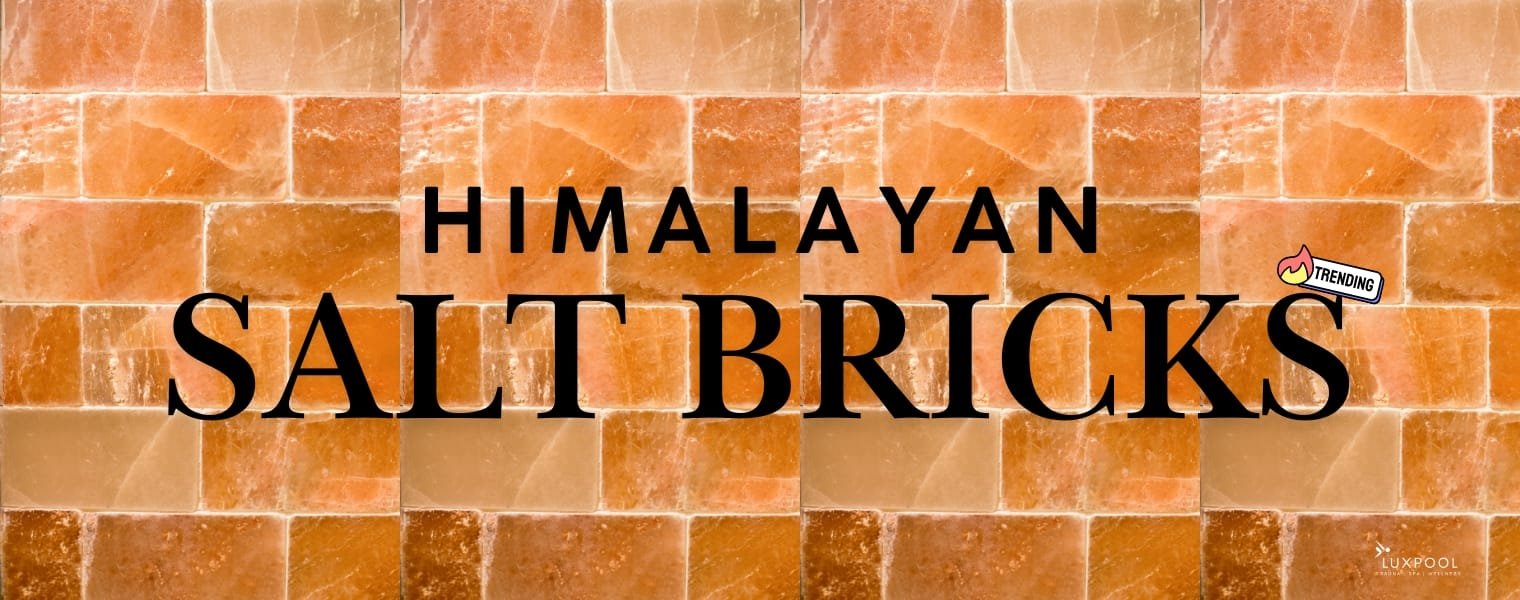
Himalayan salt bricks have typically become one of the fastest-growing trends in sauna design out there, and honestly, it’s not really hard to see why. Designers and wellness experts tend to choose these natural materials because they will easily bring together both aesthetics as well as function in a way that feels almost too natural.
On top of that, let’s not forget that people today are paying a whole lot more attention to how wellness spaces actually feel rather than just how they look. These hand-cut blocks are basically known mainly for their warm amber tones, as well as that of rich mineral composition, and have become a signature feature in premium wellness environments around the world.
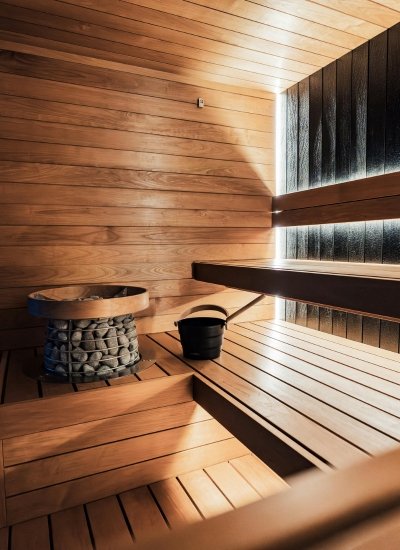
Whether they get installed as a full sauna salt wall or are even used as individual Himalayan salt tiles, they create that sort of soft, glowing atmosphere that modern spa users are usually looking for if they really want to spend time in sauna.
On top of that, these materials fit best into a wider wellness movement. So, what exactly is driving this movement? Let’s take a look
What Are Himalayan Salt Bricks?
Himalayan salt bricks are basically dense natural blocks that are naturally hand cut right from the famous Khewra Salt Mine located in Pakistan. This mine is typically considered to be one of the eldest and largest salt reserves in the world, and its origins are believed to be somewhere around 250 million years old.
Now, unlike processed table salt, this natural rock salt tends to go through very minimal processing, which directly means that it manages to somehow keep its mineral content and strength in terms of structure. Some of the main characteristics would include the following:
- They contain around 80 trace minerals, including magnesium and potassium, as well as calcium.
- Their density directly makes them very, very ideal for heated environments such as sauna wall construction.
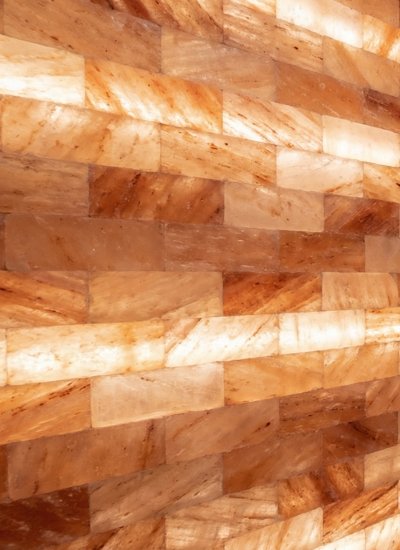
- Their pink to deep amber colour creates that sort of warm glow anytime it’s backlit.
Because of these qualities, Himalayan salt bricks tend to be used not just in wellness design, but also in projects that always focus on the benefits of sauna environments, as well as many relaxation spaces.
The Health Case Studied Well
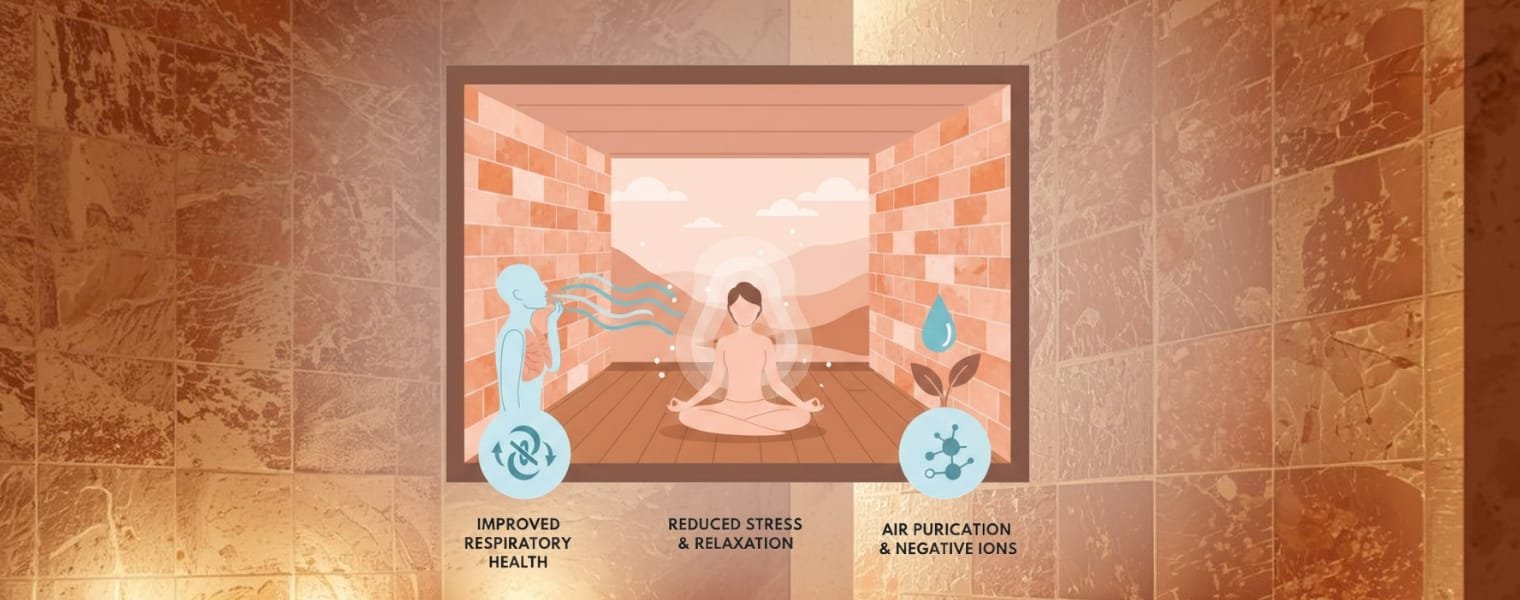
An interesting thing is that, anytime Himalayan salt bricks have been heated, they tend to release many negative ions into the surrounding space. This gets directly connected to halotherapy, which is a rather traditional therapy practice that has been mainly used in parts of Eastern Europe for many centuries.
Today, modern wellness spaces are simply adapting that idea through the use of a purpose-built sauna salt wall. According to the Cleveland Clinic, salt therapy has often been associated with respiratory wellness as well as providing many relaxation benefits. On top of that, some commonly discussed benefits include from the following:
- Respiratory Support: Salt-enriched air can help people who deal with many allergies or sinus congestion.
- Stress Reduction: Negative ions tend to be associated with a calmer mood, as well as providing lower general stress levels.
- Skin Support: Regular exposure will help maintain skin balance over the course of time.
- Heat Efficiency: A sauna salt wall absorbs and releases heat very evenly.
- Better Sleep: Many people who regularly spend time in a sauna report improved sleep routines.
“Whether you strongly believe in halotherapy or you are simply curious about it, sitting in a softly lit salt sauna typically feels relaxing in a way very few other environments can match.”
Design Versatility of Himalayan Salt Tiles and Himalayan Salt Bricks
Perhaps part of what makes Himalayan salt tiles or bricks so attractive is simply how flexible they are from a general design perspective. They work across almost any design style, whether that be a Scandinavian wellness design or even following more traditional spa environments.
This flexibility is very similar to that of a luxury swimming pool design, where materials today need to balance durability and give a nice visual experience.
How Himalayan Salt Tiles Are Sleek
Himalayan salt tiles usually offer a rather refined and contemporary look. Because they’re thinner, they are very easy to mount and tend to create a more uniform glowing surface anytime lighting is added behind them. You will mainly see these salt tiles used in:
- Modern home sauna interiors
- Hotel wellness areas
- Boutique spa studios
- Feature wall installations
How a Full Sauna Salt Wall Becomes a Statement Feature
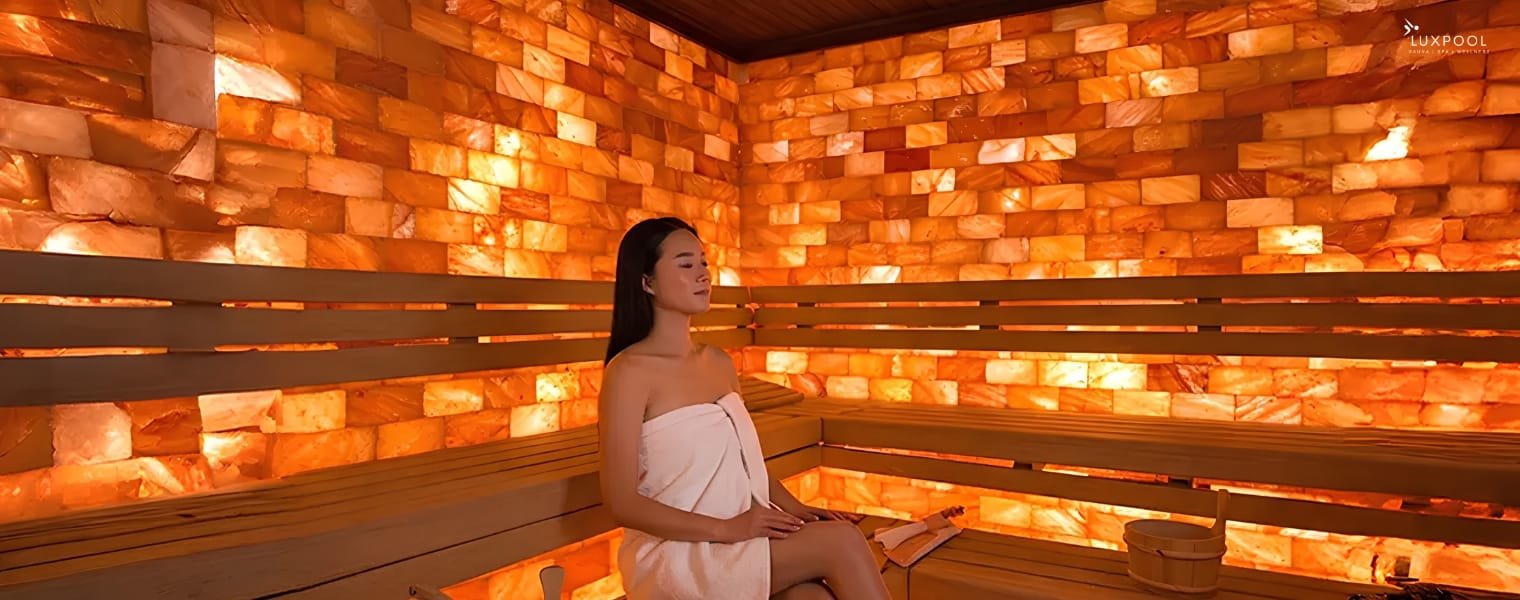
A full sauna salt wall that is made from stacked salt bricks tends to create a much more dramatic visual impact. Each brick has its own colour variation, which directly means that no two installations will ever look exactly the same. Here are some of the main reasons why they are so popular:
- Natural texture and colour variation
- Warm tones ranging from blush pink to deep terracotta
- LED lighting that creates a glowing focal point
- Improved heat retention compared to decorative panels
Essentials of Installation
If you’re ever considering installing these salt bricks, these basics will usually matter the most:
- LED lighting typically brings out the natural tones best
- Proper structural support is important because they tend to be heavy
- Surrounding materials should be sealed against moisture
- Sauna rated adhesives should always be used
- Working with a specialist installer usually produces the best results
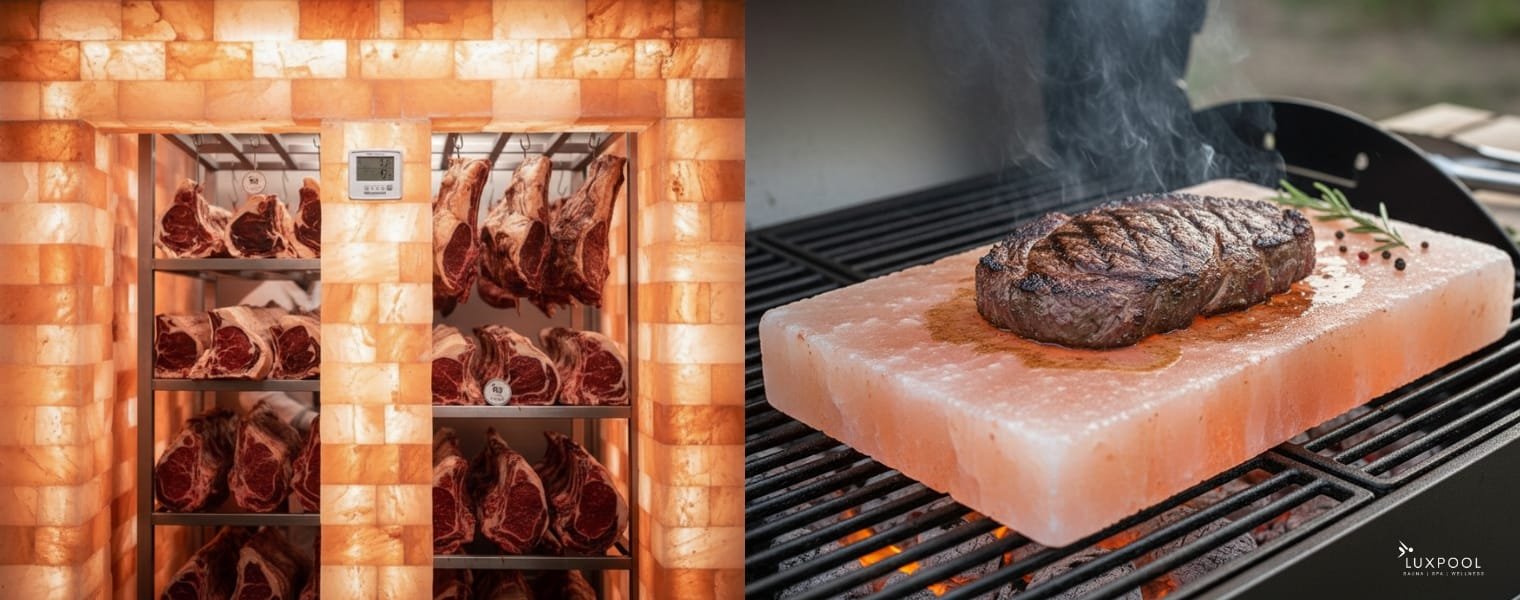
An Unexpected Use of the Dry Aging Salt Room
Interestingly, wellness isn’t really the only place where salt walls are becoming very popular. The dry aging salt room is now becoming a very serious trend in high-end restaurants and specialist butcher environments.
On top of that, a salt room like this uses walls that are directly made from Himalayan salt bricks in order to create a controlled environment where premium meat can mature naturally. This process improves the general texture as well as flavour. Also, some of the main advantages for this include:
- Natural humidity regulation
- Flavour development over time
- More consistent ageing conditions
- Strong visual presentation for customers
Why Is This Trend Happening?
This shift is clearly not random, as a few very clear lifestyle changes are driving it. First, many people are moving back towards more natural materials. Synthetic finishes are slowly being replaced by materials that feel more organic and authentic.
Also, people now think way differently about their homes, as many homeowners are investing in wellness features such as that of saunas, relaxation areas, and mental recovery spaces.
Third, the global wellness industry is growing very quickly, which directly means that people now want spaces that feel calming, not just spaces that function well. This is very similar to how pool design has evolved, where experience now plays just as big a role as engineering.
Choosing the Right Product
Before ever buying anything, a few tips to keep in mind include always checking the colour consistency before ordering, confirming sauna temperature suitability, as well as asking suppliers about getting support for installation. Here’s a general guide for how to choose the right option for you:
| Product | Best For | Key Advantages | Environment Where It Is Suited Well |
| Sauna salt wall | Luxury installations | An experience that is fully immersive | Spa hotels |
| Dry aging salt room | Culinary environments | For flavour control as well as general humidity | Restaurants |
| Himalayan salt tiles | Feature panels | They are lightweight and modern | Home and wellness |
| Himalayan salt bricks | Full sauna walls | Gives maximum thermal performance | Home and wellness |
Conclusion
It’s no secret that the growing interest in Himalayan salt bricks isn’t really just a passing trend, and it’s basically the result of people wanting more natural materials, better wellness experiences, as well as spaces that feel relaxing for them to make use of.
Whether someone is interested in the wellness potential of a bespoke sauna salt wall, the modern appearance of Himalayan salt tiles, or the culinary innovation behind a dry aging salt room, salt as a material tends to offer something quite rare.
FAQ’s
Yes, absolutely! There is a lot of credible research around salt therapy benefits, especially for respiratory comfort. Many people also report that environments using Himalayan salt bricks simply feel more relaxing. Even without proven medical outcomes, the relaxation value alone can support the benefits of sauna use.
With proper installations, Himalayan salt bricks should be able to last many, many years. The main factors include using correct adhesives, maintaining proper ventilation, avoiding direct water contact, and managing exposure of moisture.
Both directly come from the same natural salt source, and the difference usually comes down to size and application. Himalayan salt bricks tend to be thicker and better for full wall construction, while Himalayan salt tiles are lighter and are better for feature designs.
Yes, a small decorative wall can be manageable for experienced DIY builders. But remember that a full sauna salt wall usually benefits from having a specialist installation, simply because of weight and heat expansion.
A dry aging salt room will offer a natural humidity balance, qualities that are naturally antimicrobial, a strong visual representation, and improved flavour development.