

Every swimming pool reaches a point where it starts to show its age. The tiles look dull, the water needs more chemicals than it used to, and the plant room hums away far louder than it should. At that stage, most owners start looking into swimming pool repair services UK wide, and ask the same question: can this pool be repaired and renovated, or is it time to start again from scratch?
There is no single answer, because it depends on what is actually wrong. A pool with a sound shell and tired finishes is a very different project from a pool that leaks and moves. This guide explains how to tell the two apart, what repair and refurbishment work involves, and how to make the decision with confidence.
What Do Swimming Pool Repair Services Cover?
Swimming pool repair services range from small fixes to full restoration. At the smaller end, it might be a failed light, a worn seal or a pump that has stopped. At the larger end, it becomes a full swimming pool refurbishment: repairing the structure, replacing the finishes and rebuilding the plant room.
The most common repairs on UK pools are:
- Leak detection and repair. Tracing water loss to the shell, the pipework or a fitting, then fixing the cause rather than the symptom.
- Crack repair and waterproofing. Cutting out cracks properly and re-waterproofing the shell as a complete system.
- Tiling and finish repairs. Replacing loose, cracked or stained tiles, mosaic and render.
- Plant and equipment repairs. Pumps, filters, heaters, valves and controls that have reached the end of their life.
- Pipework repairs. Old or damaged underground pipework, which is a common hidden cause of water loss.
When several of these are needed at once, a one-off repair usually stops being the sensible answer. That is the point at which a full refurbishment is worth pricing up alongside it.
What Is a Swimming Pool Refurbishment?
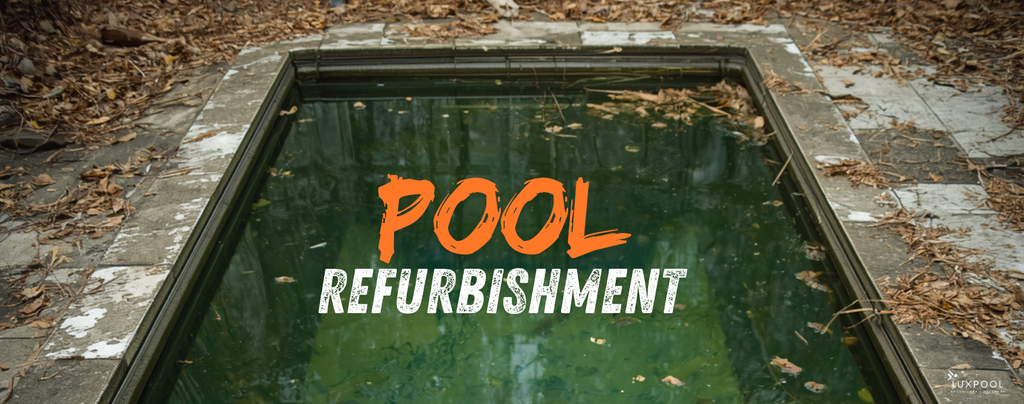
A swimming pool refurbishment is the process of bringing an existing pool back to full working order, and usually improving it at the same time. It can be light or extensive, depending on the condition of the pool.
Typical works include:
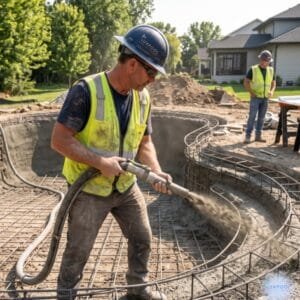
- Repairing and re-waterproofing the pool shell
- New tiling, render or mosaic finishes
- Replacing coping stones and surrounds
- Upgrading filtration, pumps and pipework
- Fitting new lighting, heating and covers
- Changing steps, benches or the shape of the shallow end
Most domestic swimming pool refurbishment projects sit somewhere in the middle: some structural repair, a full set of new finishes, and a modern plant room to replace equipment that has done its time.
Signs Your Pool Needs Attention
Pools rarely fail overnight. They give you warnings first. These are the signs that it is time to call in swimming pool repair services before a small problem becomes a structural one:
1. The water level keeps dropping
Some loss through evaporation is normal, especially in summer. Losing more than that, week after week, points to a leak in the shell, the pipework or a fitting.
2. Cracked, loose or stained tiles
Hollow-sounding tiles and crumbling grout usually mean water is getting behind the finish. Left alone, this gets worse and more expensive.
3. The water is hard to keep clear
If you are adding more and more chemicals to get the same result, the filtration system is often the culprit rather than the water itself.
4. Noisy, thirsty plant equipment
Older pumps and heaters use far more energy than modern equivalents. A noisy plant room is often an inefficient one.
5. The pool no longer suits you
Sometimes nothing is broken at all. The pool simply looks dated, sits awkwardly in the garden, or was built for a family that has since grown up.
When Pool Renovations Are the Right Choice
Renovation is usually the sensible route when the bones of the pool are still good. In practice, that means:
- The shell is sound. Concrete pools are built to last decades. The structure often outlives the tiles, the plant and the lighting by many years.
- There is no ongoing movement. Fine surface cracks are common and repairable. Cracks that keep growing are a different matter.
- The position and size still work. If you would build the pool in the same spot today, there is no reason to move it.
- You mainly want a new look and better performance. Finishes, water treatment, heating and lighting can all be transformed without touching the structure.
Pool renovations are faster, far less disruptive to your garden, and rarely involve planning permission. For most owners of a well-built concrete pool, this is the option that makes sense.
When a Full Rebuild Makes More Sense
Sometimes patching up an old pool only delays the inevitable. A rebuild is worth serious thought if:
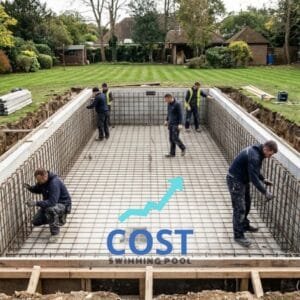
- The shell has structural cracks or is moving. Ground movement, poor original construction or a high water table can all cause this. No finish will hold over a shell that keeps shifting.
- The pool has been repaired repeatedly. A history of patch repairs that never quite solve the leak is a strong signal.
- You want a different size, shape or depth. Small changes can be made during a swimming pool renovation. Major ones cannot.
- You are moving from a liner pool to concrete. A one-piece or liner pool cannot simply be converted. A new concrete shell is the honest answer.
- The pool is in the wrong place. Poor sunlight, awkward access or a layout that cuts the garden in half will not improve with new tiles.
There is also a practical tipping point. When the amount of repair work needed starts to approach what a new pool would involve, rebuilding gives you a far better long-term result for a similar level of investment.
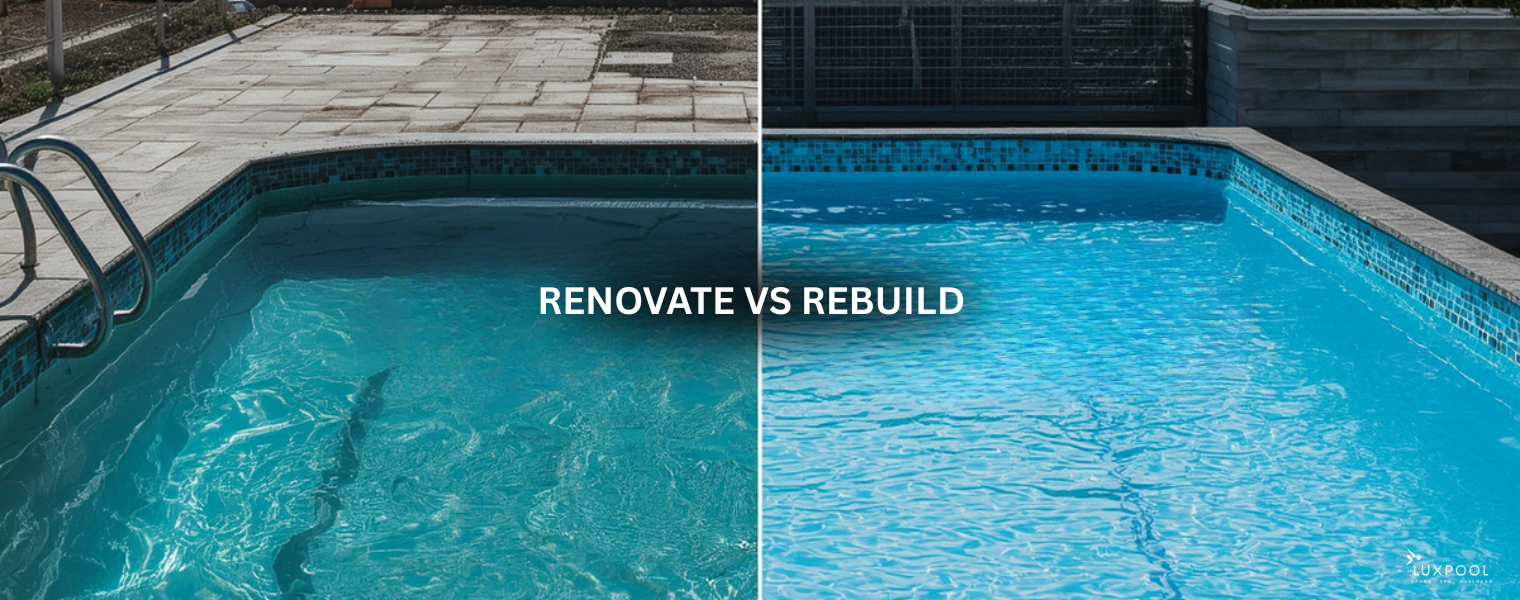
Pool Renovation vs Rebuild: A Quick Comparison
| Consideration | Pool renovation | Full pool rebuild |
| Pool shell | Sound, with no ongoing movement | Cracked, moving or badly built |
| Main work | Finishes, plant, pipework, tiling | Excavation, new shell, everything above |
| Design changes | Surface finish, lighting, coping, steps | Size, shape, depth and position all open |
| Disruption to garden | Low to moderate | Significant — machinery and site access needed |
| Typical timescale | A few weeks | Several months |
| Planning permission | Rarely needed | May be needed if the footprint changes |
| Best for | A tired pool in the right place | A failing pool, or one that no longer suits you |
If you are unsure which column your pool sits in, a proper survey will tell you within a single visit. Guessing is the expensive option.
What a Domestic Swimming Pool Refurbishment Involves
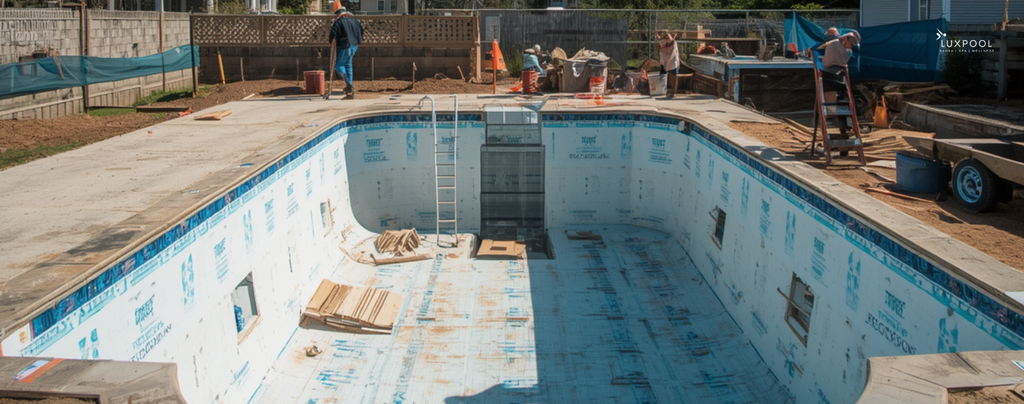
A well-run refurbishment follows a clear order. Skipping steps is what causes problems to return.
- Survey and leak testing. The pool is inspected empty and full, with pressure testing on the pipework to find exactly where water is escaping.
- Drain and strip out. Old tiles, render and failed waterproofing are removed back to a sound surface.
- Structural repair. Cracks are cut out and repaired properly, then the shell is re-waterproofed as a complete system.
- Plant room and pipework. This is the right moment to replace tired pumps, filters and pipework, while everything is accessible.
- New finishes. Tiling or mosaic, coping stones, lighting and fittings go in, and the pool starts to look like itself again.
- Fill, balance and handover. The pool is filled, the water is balanced, everything is commissioned and you are shown how it all works.
Upgrades Worth Making During a Pool Renovation
The best time to improve a pool is while it is already empty and open. These upgrades are much easier now than later:
- A chlorine-free mineral water system. Softer on skin, eyes and hair, with no chlorine smell and far gentler on the pool finishes.
- Efficient heating. A modern heat pump extends your swimming season and costs less to run than older systems.
- An automatic cover. It keeps heat in, keeps debris out, reduces evaporation and adds a layer of safety.
- LED lighting. Low energy, long life, and it completely changes how the pool looks in the evening.
- Automation. Control heating, lighting and filtration from your phone rather than the plant room.
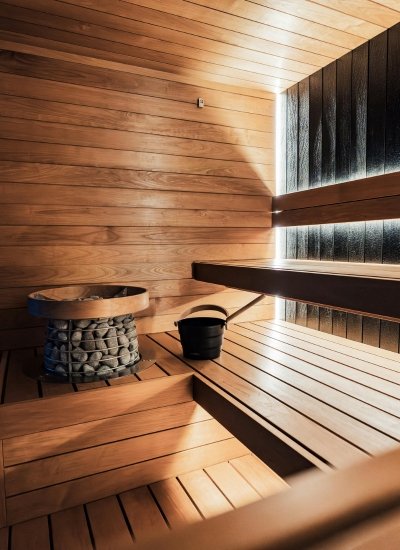
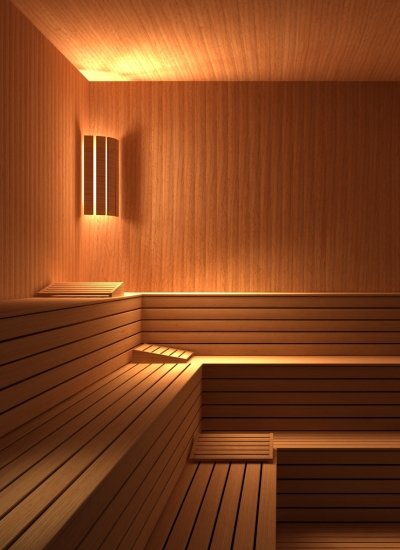
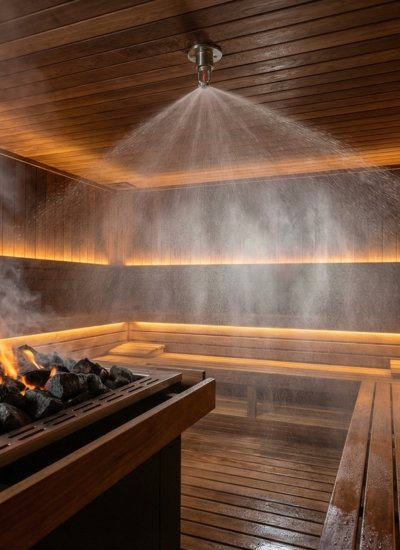
- Wellness additions. A sauna, steam room or outdoor shower turns a pool into a proper wellness space.
How Long Does a Swimming Pool Refurbishment Take?
A straightforward refurbishment usually takes a few weeks on site. More involved projects with structural repair, a new plant room and full re-tiling take longer, and drying and curing times cannot be rushed.
In the UK, the smart move is to start in autumn or winter. The pool is not in use, contractors have more availability, and everything is finished and filled in good time for summer. Waiting until May often means losing the season you were hoping to enjoy.
Choosing Swimming Pool Repair Services in the UK
Repair and refurbishment work is unforgiving. You are working on someone else’s pool, often without knowing what is behind the tiles, so experience matters more than it does on a new build. Not every company offering swimming pool repair services UK wide is set up for structural work.
- Ask specifically about concrete pool experience, not just pool maintenance
- Check whether the work is done in house or subcontracted out to several trades
- Ask to see completed refurbishments, not only new build photographs
- Make sure the survey happens before any quotation, never after
- Get the scope in writing, including what happens if hidden damage is found
Renovate or Rebuild? The Short Answer
If the shell is sound and the pool is in the right place, refurbish it. You will get a pool that looks and performs like new, without the cost and upheaval of starting again.
If the structure is failing, or the pool no longer suits how you want to use your garden, rebuild it. Spending on repairs that never quite hold is the most expensive route of all.
A proper survey removes the guesswork and tells you which of those two situations you are actually in. Good swimming pool repair services will always start there, rather than quoting blind.
Ready to Talk About Your Pool?
Whether your pool needs a single repair, a full refurbishment or a complete rebuild, the first step is the same: an honest assessment of what you already have. Luxpool designs and builds bespoke concrete pools across the UK and UAE, and offers swimming pool repair services and refurbishment to the same standard, with everything handled by our own in-house team.
Get in touch to arrange a survey and find out which option is right for your pool.
FAQ’s
Most repair work falls into leak detection, crack and waterproofing repair, tile and finish repair, pipework, and plant room equipment. A survey establishes which of these your pool actually needs.
Minor repairs can sometimes be done underwater, but any meaningful swimming pool refurbishment involves draining the pool so the shell and finishes can be worked on properly.
In most cases yes, because the excavation and shell already exist. The gap narrows if extensive structural repair is needed, which is why the survey stage matters so much.
Usually not, as you are working within the existing footprint. Permission is more likely to be needed if you enlarge the pool, change its position, or add an enclosure or building.
Yes. A refurbishment is the ideal opportunity to fit a mineral water system, as the plant room and pipework are already being upgraded.