

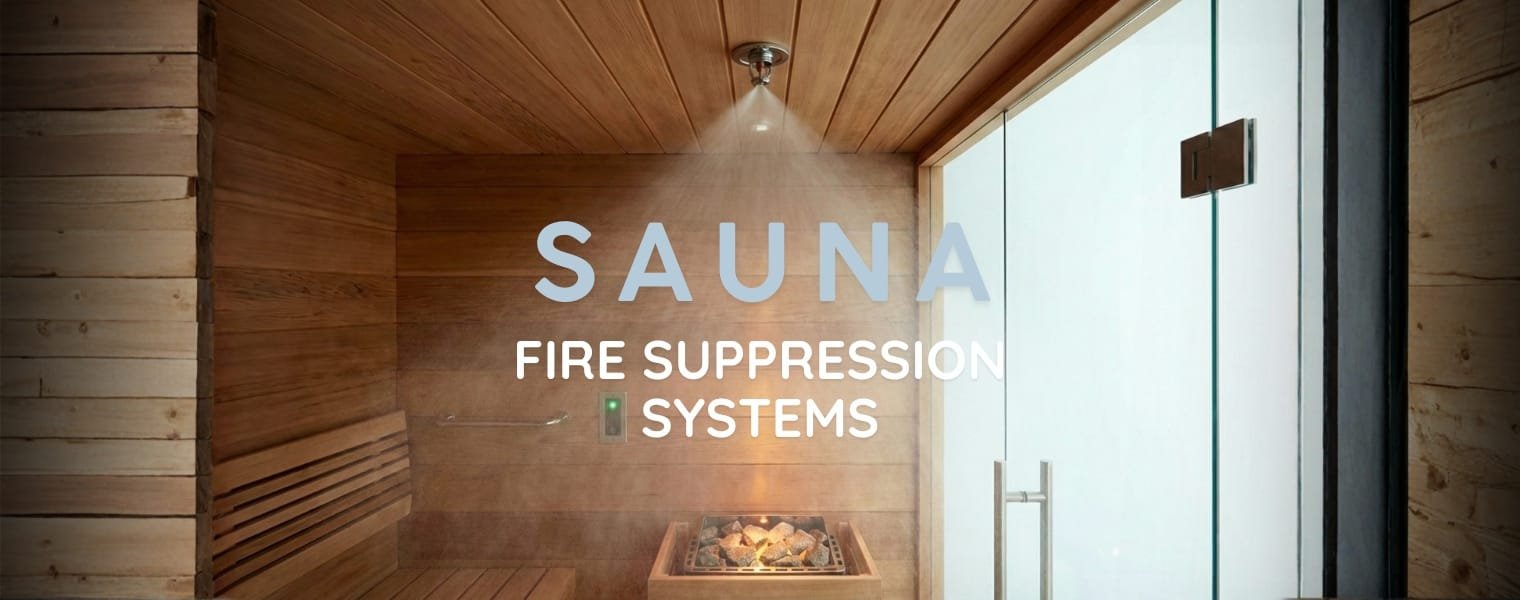
The saunas are constructed using heat, electricity, and wood. Such a combination offers wellness benefits, but it may create fire hazards when safety measures are neglected. Due to the increasing popularity of sauna installations at home, in hotels, gyms, and spas, fire protection is now compulsory and essential.
Professional sauna builders in the UK now treat fire suppression systems as a safety layer, particularly in commercial or high-value residential constructions. The idea is straightforward, make sure that minor things do not turn into big damage or threat.
Typical Fire Hazards in Wellness Areas and Saunas.
Understanding the risks helps explain why the suppression system matters.
Common fire hazards are:
- The cause could be overheating or defective heaters in the sauna.
- Control panel or wiring electrical faults.
- Poor ventilation resulted in heat accumulation.
- Timber surfaces are exposed to prolonged high temperatures.
- Poor installation or DIY alterations.
These dangers increase in small, enclosed areas or basement fittings, where heat and smoke can spread rapidly.
What is a Sauna fire suppression system?
A fire suppression system is an automatic safety system designed to detect and control fires at the initial stage. Suppression systems are responsive, unlike regular smoke alarms, which do not respond but respond directly to the source of the risk.
These systems are designed to operate in a high-temperature, high-humidity environment with timber interiors in the sauna, without causing damage to the sauna or interfering with normal operations.
How Sauna fire suppression systems operate.
Here’s the basic idea.
- The sauna area is monitored by a heat/fire detecting element.
- The system automatically activates when temperatures exceed safe levels or when fire is detected.
- An extinguishing agent is controlled and emitted on the heater or ceiling region.
- Before the fire spreads, it is put out.
The majority of the systems do not require an electric supply but use pressurised cylinders or thermal triggers. That makes them reliable even in the event of a power failure.
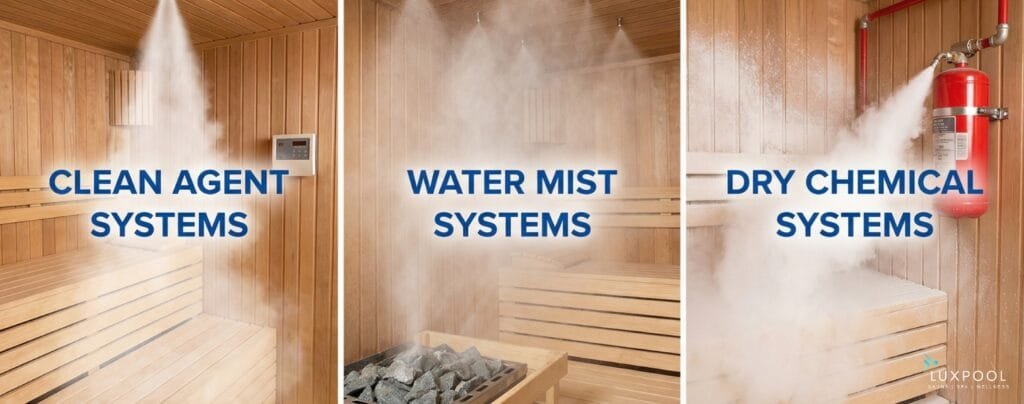
Fire Suppression System in Saunas.
Not every fire suppression system is suitable for saunas. The most popular ones are:
Clean Agent Systems
These contain non-toxic, residue-free agents that do not damage timber or electrical parts and that suppress fire.
Water Mist Systems
Fine water particles extinguish the fire quickly and with minimal water, minimising steam shock.
Dry Chemical Systems
Good, but less popular in saunas due to the cleanup and the potential damage to finishes.
Clean-agent or water-mist systems are the most popular in modern sauna installations.
The most efficient fire suppression system in saunas.
The most appropriate system is determined by the type of sauna, size, and location. But in higher-end residential and commercial projects, clean-agent suppression systems are often considered the most appropriate choice.
They offer:
- Fast activation
- No residue
- Little disturbance of the sauna structure
- Fitting in with high-end wellness areas.
Experienced sauna builders in the UK assess heater output, room size, and ventilation before recommending a system.
Installation of Fire Suppression System (Overview).
In a professional sauna project, fire suppression is an integrated part of the overall safety design.
The sauna installation process normally involves:
- Checking the site and risk analysis.
- System selection based on sauna layout and heater type.
- Installation of suppression nozzles and sensors.
- Linked to the existing sauna controls where needed.
- Final testing and certification.
Specialist wellness contractors like Luxpool are more regulation-conscious and follow a systematic process to ensure the system functions seamlessly with the sauna without interfering with the product’s performance or appearance.
Is it possible to add Fire Suppression to an Existing Sauna?
Yes. Retrofitting existing saunas with fire suppression systems is possible in most cases.
Retrofitting is common in:
- Older commercial saunas
- Home saunas are made to meet standards or insurance requirements.
- Enclosed wellness areas or a basement.
A professional evaluation is mandatory to ensure a compatibility with the existing heater, ceiling height and ventilation. With proper design, retrofitting requires very little modification to the sauna’s interior.
Sauna fire safety regulations and compliance in the UK.
Sauna fire safety in the UK is governed by a combination of building regulations, fire safety legislation, and industry standards.
Key considerations include:
- Compliance with Building Regulations on fire safety.
- Commercial premises fire risk assessment.
- Heaters and controls electrical safety standards.
- Local authority and fire officer requirements for spas and gyms.
They are not necessarily legally obligatory, but in the UK, insurers or professional sauna builders frequently require them or advise them, especially in high-occupancy spaces or those used by the general public.
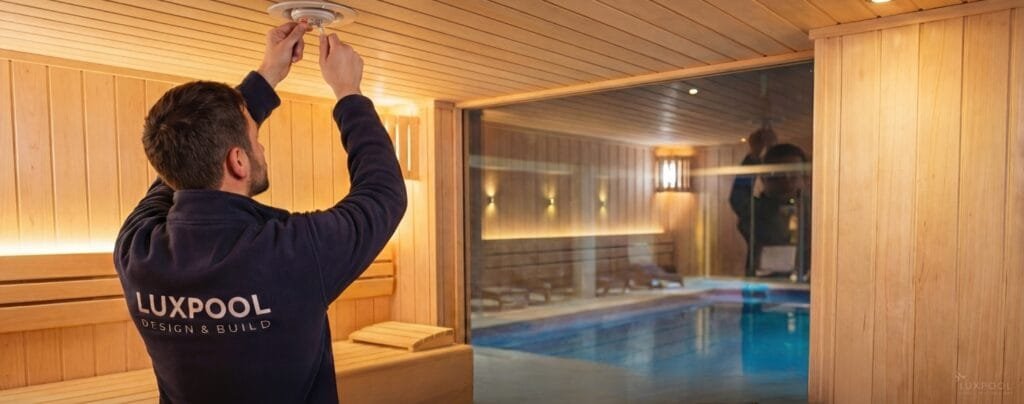
Professional Sauna Builders Role.
Fire safety is not something to bolt on at the completion of work. Reputable sauna builders and installers in the UK consider suppression systems during the design stage.
This ensures:
- Correct system sizing
- Regulations and compliance.
- Clean, concealed installation.
- Long-term reliability
The collaboration with the knowledgeable specialists also minimizes the time of approvals and prevents the implementation of the changes that cost a lot of money.
The reason why fire safety should be included in all saunas.
The right type of sauna is not only concerned with heat and materials. It is about peace of mind.
Adding fire suppression:
- Protect people and property.
- Conserves quality timber interiors.
- Supports insurance and regulatory needs.
- Future proofs your wellness investment.
In modern wellness spaces, safety and luxury go hand in hand.
Final Thoughts
With the trend of increasing sauna installations in the UK, fire suppression systems are becoming standard rather than an upgrade. Whether you are designing a new wellness facility or upgrading an existing sauna, one of the best choices is to integrate fire safety into the design.
Experienced sauna builders in the UK who are knowledgeable about the balance between performance, aesthetics, and safety, resulting in a sauna that will not compromise on relaxation.
* Too busy to read? Watch the video for a brief overview of the blog’s key points *
FAQ’s
It is reliant on the location, use and assessment of risk of the sauna. A commercial sauna will need one much more often, particularly the insurance and compliance purposes.
Contemporary systems are aimed at minimisation of the impact. Clean agent and water mist systems do not harm timber and electrical parts when installed appropriately.
Most systems are compatible with electric sauna heaters. Compatibility should always be confirmed by professional sauna builders before installation.