


Himalayan Salt Bricks: Benefits, Uses, and Why They Are Popular in UK Wellness Spaces
In recent years, wellness-focused interior design has become a major trend across the UK, particularly in spas, luxury homes, and hospitality spaces. Both Architects and interior designers increasingly incorporate spa-inspired elements and natural materials into residential and hospitality spaces. This includes the use of natural materials. One of those materials is Himalayan salt bricks.
One material that has gained increasing attention in wellness design is the Himalayan salt brick. They add both visual appeal and functionality. The sauna salt walls have an organic appearance, and the dry aging salt rooms (in restaurants) are a distinctive feature increasingly used in hospitality environments. Himalayan salt installations combine natural beauty with practical use. Today, we will help you explore Himalayan salt bricks, how you can use them, and why they have become such a popular addition to modern spaces everywhere.
What Are Himalayan Salt Bricks?
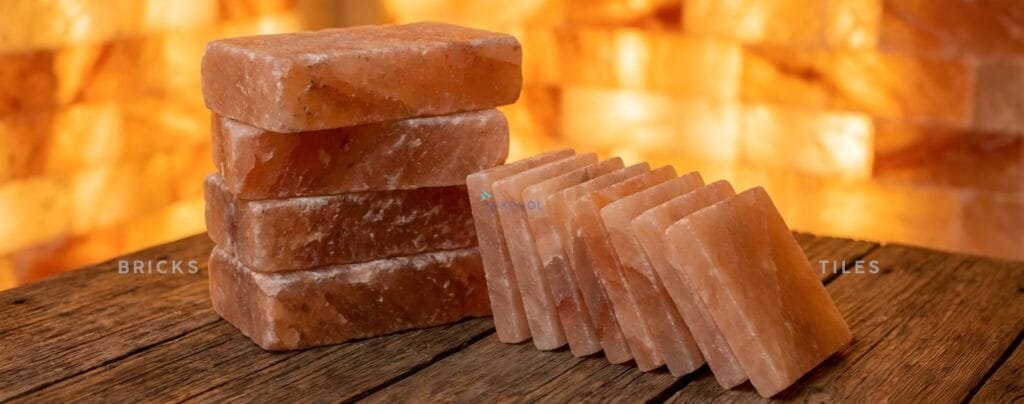
Himalayan salt bricks are solid blocks of natural rock salt. They come from ancient salt deposits in the Himalayan region. These deposits formed millions of years ago when prehistoric oceans evaporated, leaving behind large layers of mineral-rich salt crystals. Over time, because of the trace minerals such as potassium, magnesium, and iron, these crystals developed the distinctive pink and amber hues.
However, to turn this into a decorative piece, the Himalayan salt blocks are cut and shaped into different variety of pieces. Because each brick has a slightly different texture and shade, every salt wall installation becomes unique. People nowadays use Himalayan salt bricks in:
- spa and wellness centres
- sauna salt walls
- salt therapy rooms
- luxury interior design features
- restaurant dry aging rooms
Their soft colour palette and unique visual texture make them the perfect choice if you want to create a relaxed space.
Himalayan Salt Tiles vs Himalayan Salt Bricks
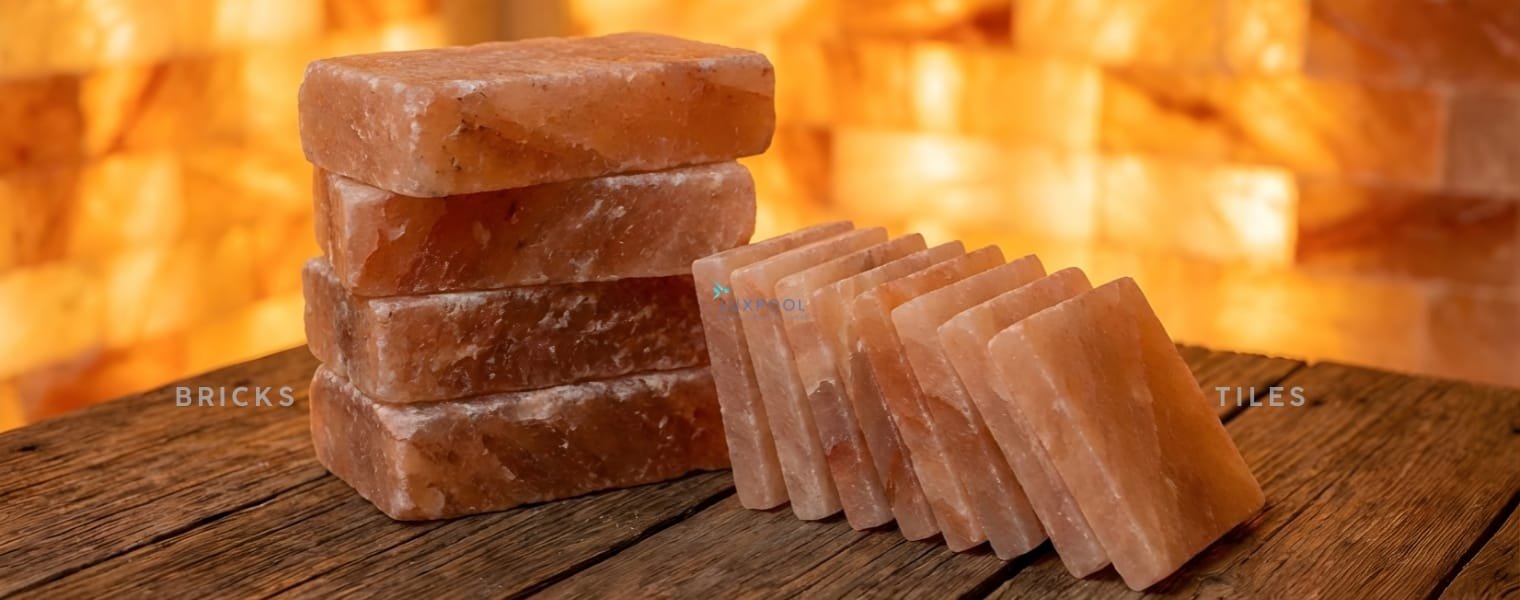
Although they come from the same natural salt deposits, Himalayan salt tiles and salt bricks are slightly different;
Himalayan Salt Bricks
The salt bricks are thicker in size and heavier, and you can construct full salt walls with them. They create a strong appearance, and you can use them in spas, saunas, and wellness centres.
Himalayan Salt Tiles
On the other side, the Himalayan salt tiles are thinner and lighter. You can use them as decorative small size wall panels, feature walls, and interior design elements essentially, and also use in cooking food and meal serving slabs.
Benefits of Himalayan Salt Brick Walls
Himalayan salt walls are particularly popular in spa architecture because they combine natural materials with ambient lighting (two elements commonly used in wellness-focused design). They are also widely valued for their visual appeal and the atmosphere they help create in wellness environments.
Calming Ambient Lighting
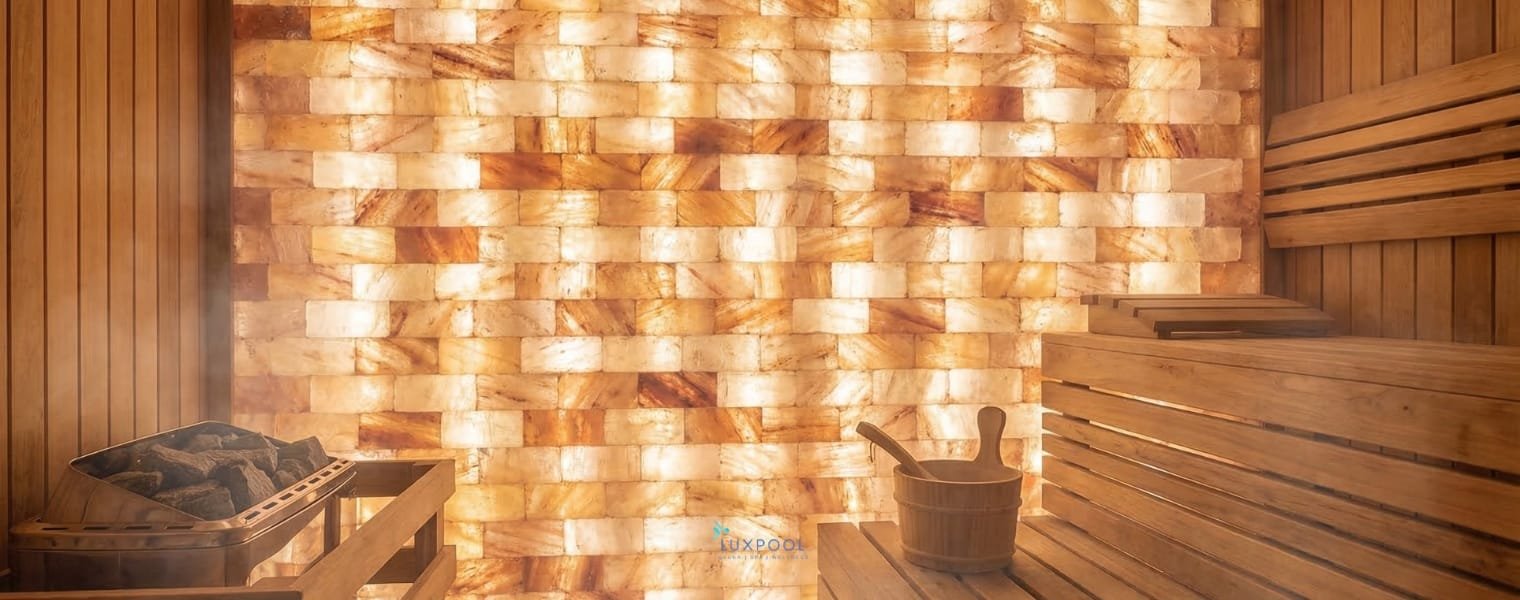
One of the most attractive features of Himalayan salt bricks is how they interact with light. When you add warm LED lights, the salt crystals produce a soft amber glow that creates a relaxing atmosphere. You can often notice this in spas and meditation spaces.
Unique Natural Design
Every salt brick varies in colour and texture. This natural variation makes every salt wall visually pleasing and unique in modern wellness architecture.
Wellness-Focused Environment
Salt has long been associated with wellness environments such as salt therapy rooms and halotherapy spaces. Natural materials and warm lighting are commonly used in wellness architecture to create environments that encourage relaxation.
Premium Interior Feature
When it comes to luxury spas, hotels, and home wellness spaces, Himalayan salt walls are a statement design piece because they enhance the overall experience.
Sauna Salt Walls: A Growing Wellness Trend
A sauna salt wall combines traditional sauna heat with the natural beauty of Himalayan salt bricks. In many sauna designs, salt bricks are installed behind the seating area or along one wall of the sauna. To achieve that calming glow during the sessions, you can add some soft lighting behind the salt to enhance the natural colours.
Sauna salt walls are popular for several reasons:
- Creates a spa-like sauna experience.
- It adds visual warmth to the sauna interior
- It enhances the overall design of the space
- It provides a unique feature for luxury saunas
Many modern home saunas and commercial wellness facilities now include Himalayan salt walls as a part of their design.
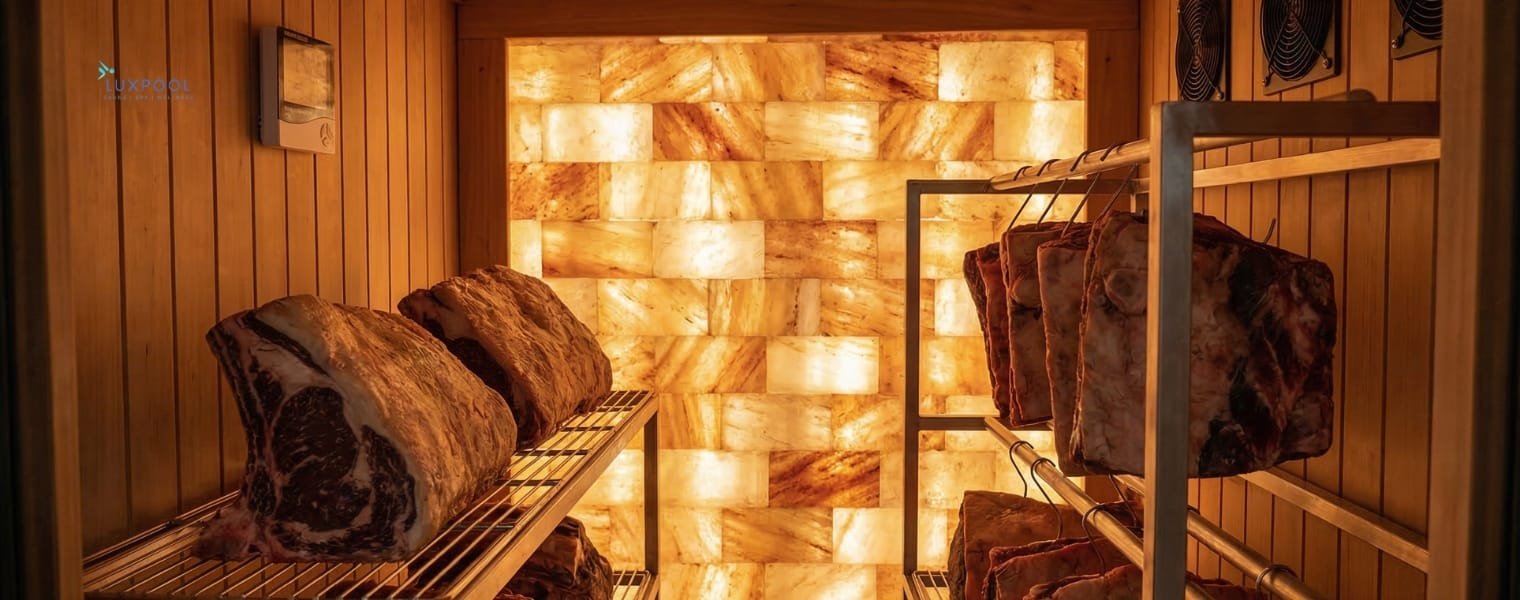
Dry Aging Salt Rooms for Restaurants
You can also use Himalayan salt bricks is in dry aging salt rooms. Many high-end restaurants and steakhouses often age premium cuts of meat in temperature-controlled rooms. These rooms are lined with salt bricks or salt tiles. The salt environment helps maintain a stable humidity level, which supports the dry-aging process. It results in meat with a deeper flavour and texture. Specifically, dry aging salt rooms are used for:
- Premium beef cuts
- Steak aging
- Specialty restaurant meat displays
Not only are the dry aging salt rooms visually pleasing, but they offer a functional feature as well.
Himalayan Salt Bricks Use
Nowadays, people use Himalayan salt installations in both wellness and hospitality spaces. For example, you can notice them in:
Spa and Wellness Centres – Salt walls create a relaxing feeling in spa treatment areas and relaxation rooms.
Luxury Home Saunas – Many homeowners install sauna salt walls to bring spa-style wellness into their homes.
Salt Therapy Rooms – Some wellness centres design full salt therapy spaces using Himalayan salt bricks.
Yoga and Meditation Studios – The warm lighting creates calm spaces for mindfulness and relaxation.
Restaurants – Dry-aging salt rooms allow restaurants to age and display premium meat in controlled environments.
Hotel Wellness Areas – Luxury hotels often use salt walls as a distinctive design feature in spa facilities.
How To Install Himalayan Salt Walls
Installing a Himalayan salt wall requires careful planning and proper structural support. Typically, first you need to prepare a support frame or structure. The salt bricks are then arranged within the frame and secured using mounting systems designed specifically for salt installations.
If you want to enhance the natural colours of the salt, then install lights behind the bricks (the best options would be warm LED lights). In professional spa and sauna projects, salt walls are typically installed by specialists to ensure structural stability, proper ventilation, and safe integration of electrical lighting.
Why Himalayan Salt Walls Are Popular in the UK
The UK wellness industry continues to grow as more people turn to spaces focused on self-care. From boutique spas to luxury homes, wellness design has become an important part of modern architecture. Here is why Himalayan salt bricks fit perfectly into this trend:
- They are natural materials
- They pair perfectly with warm ambient lighting
- They deliver a distinctive visual feature
- They are used in wellness-focused environments
Himalayan salt walls create memorable spaces that feel both natural and luxurious.
FAQ’s
Himalayan salt bricks are used to build salt walls in spas, saunas, salt therapy rooms, wellness centres, and restaurant dry aging rooms.
Salt bricks are thicker blocks mostly used in wellness space, while Himalayan salt tiles are thinner and mainly used as cooking and serving food.
Salt bricks are thicker blocks mostly used in wellness space, while Himalayan salt tiles are thinner and mainly used as cooking and serving food.
Yes. When properly installed with appropriate ventilation and lighting, Himalayan salt bricks can be used to create sauna salt walls.
A dry-aging salt room is a temperature-controlled space lined with salt bricks or tiles where people age premium meats (to enhance flavour and texture).
Salt walls generally require minimal maintenance, but you should install them correctly with proper airflow and lights to achieve long-term durability.
