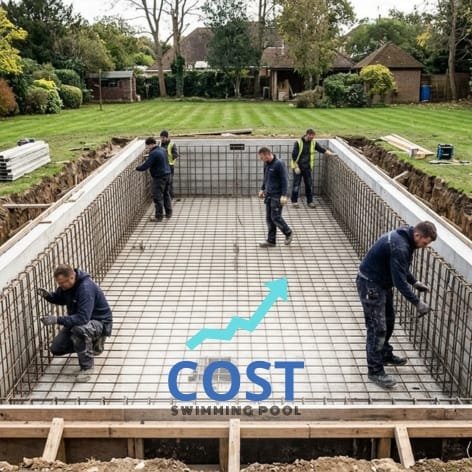
swimming pool build costs in the UK

What Does It Really Cost to Have a Swimming Pool Built in the UK? 

cost of a swimming pool in uk by luxpool

This guide breaks down the main factors that influence the cost of a pool build in the UK, what you need to think about beyond the build itself, and how to approach getting a quote that reflects your project accurately. 

Why Pool Costs Vary So Much Across the UK 

The first thing most homeowners notice when researching a pool build is the extraordinary range of costs, that range is genuine. Pool construction is a bespoke civil engineering and building project not a standardised product and the cost reflects the complexity, materials, site conditions, and specification involved in each individual build. 

Type of Pool: Inground, Above-Ground, Indoor vs Outdoor 

The type of pool you choose has the single greatest influence on overall cost. Above-ground pools are the most accessible entry point and require minimal groundwork, but they are not permanent structures and offer limited design flexibility. Inground outdoor pools are the most common choice for UK homeowners permanent, fully integrated into the garden, and available across a range of construction methods and finishes. Indoor pools represent the most significant investment because they require not just the pool itself but the full building envelope: structure, waterproofing, ventilation, dehumidification, and year-round climate management. 

Size, Shape and Depth  

Every additional metre of pool length increases the cost more materials, more excavation, more water volume, more heating and filtration capacity. Shape adds further complexity: a straightforward rectangular pool is the most cost-efficient to build, while freeform, kidney-shaped, or irregular designs require more complex formwork and more intricate plumbing. Depth is also a genuine cost driver that is easy to underestimate. Going deeper than a standard domestic pool requires significantly more excavation, more structural engineering, and in some cases specialist design input particularly for basement and indoor installations. 

Materials: Concrete, Fibreglass and Stainless Steel  

The choice of construction material is one of the most important decisions in any pool build. Each option has a different cost profile, a different build process, and a different long-term maintenance picture. 

Material Build Flexibility Build Time Maintenance Demand 
Concrete Fully bespoke 8 – 16 weeks Low, built to last 
Fibreglass Standard shapes 4 – 8 weeks Very low 
Stainless Steel Fully bespoke 6 – 12 weeks Very low 
Block & Liner Good flexibility 6 – 10 weeks Medium — liner replacement 

Concrete pools are the most versatile construction method and the specialist area of Luxpool’s work. Built using waterproof high grade concrete, they can be constructed to any shape, depth, or specification making them the preferred choice for bespoke residential projects, indoor pools, and commercial installations. The build process is longer than fibreglass, but the result is a permanent, fully customised structure with no compromise on design. 

Fibreglass pools use a factory-made shell lowered into the excavated ground. Installation is faster and the smooth surface is low maintenance, but you are working within the manufacturer’s range of available shapes and sizes. They suit clients who want a reliable, lower-maintenance outdoor pool without the need for a fully bespoke design. 

Stainless steel pools offer a precision-engineered, watertight finish with a contemporary aesthetic. We installs stainless steel pools as part of our broader offering they are particularly well suited to indoor environments and premium design schemes where the pool itself is a visual centrepiece. 

construction of a outdoor swimming pool in uk

Which Tier of Project You Are Looking  

Rather than quoting figures that will vary based on your specific site and brief, it is more useful to understand what separates different levels of pool project. The three broad tiers entry level, mid-range bespoke, and premium are defined not just by size, but by the complexity of the design, the specification of the materials, and how the pool integrates with the wider property. 

For an accurate budget for your project, the right approach is always to have a site consultation with a specialist. Luxpool provides a free initial consultation and detailed, itemised quotes on every build. 

Entry-Level Outdoor Pool Builds 

An entry-level pool build typically involves a straightforward inground installation using fibreglass or a block-and-liner construction, in a standard shape and modest size, with a basic filtration and heating package. The groundwork is assumed to be straightforward, with good site access. This is a functional, permanent outdoor pool well suited to homeowners who want to add a pool to the garden without the complexity of a fully bespoke project. 

It is worth bearing in mind that the headline pool price rarely tells the whole story. Heating, lighting, a pool cover, and even a basic paved surround all sit outside the core build cost and need to be factored into the total budget. 

Mid-Range and Bespoke Pool Projects 

The mid-range bracket is where the majority of Luxpool’s residential projects sit. These are bespoke concrete builds designed to the client’s brief considered in layout, integrated into the garden design, with quality heating and filtration, LED lighting, automated covers, and a finish that reflects the property. The pool is not just a functional addition; it is a designed feature of the home. This tier also includes a wide variety of concrete pool forms: L-shapes, split-level designs, pools with integrated spas, and those with infinity or overflow edges. 

Premium and Luxury Pool Installations 

Premium projects are typically large-scale, architecturally complex, or technically demanding builds. This tier includes indoor pools with full building and mechanical engineering, basement pools requiring structural design, large outdoor concrete pools with integrated water features, and commercial installations. Luxpool is regularly engaged at this level working alongside architects, landscape designers, and interior designers to deliver pools that are built to the highest standard and designed to last the lifetime of the property. 

Hidden Expenses Most Homeowners Overlook 

The pool build itself is only part of the overall investment. Several associated costs sit outside the core construction quote and are easy to overlook in the early planning stage. 

Planning, Groundwork and Excavation 

In most cases, outdoor swimming pools in England do not require formal planning permission under permitted development rights. However, conservation areas, listed buildings, and certain covenant-restricted properties are exceptions, and building regulations compliance is always required regardless. Ground conditions have a significant influence on cost soft, stable soil with good site access is the best-case scenario. Clay, rock, a high-water table, or restricted access can each add meaningfully to the process and budget. A site survey before committing to any fixed price is strongly advisable. 

Heating, Filtration and Electrical Setup 

Many basic pool quotes are provided without a heating system or with only a minimum specification for filtration. For a pool to be genuinely usable across a UK climate, a properly specified heating system is essential. Heat pumps are the most energy-efficient choice for outdoor pools. For indoor pools, the heating load is higher and the plant room specification more complex. Undersized filtration is one of the most common and costly mistakes in pool builds getting the specification right at the outset saves significant expense later. 

Landscaping and Finishing Around the Pool 

The pool surround paving, decking, fencing, planting, and any associated structure such as a plant room enclosure or pool house is consistently one of the most underestimated elements of the total project. It is also the most visible part of the finished result. Landscaping and surrounds typically represent a meaningful proportion of the overall project spend, and for premium projects with natural stone, bespoke planting schemes, and integrated entertaining areas, this element alone can be substantial. 

a complete ready to swim pool build and design by a luxpool uk uae company

Ongoing Annual Running Costs to Factor In 

A swimming pool is a long-term commitment, and understanding the annual running costs is just as important as understanding the build budget. Most outdoor residential pools in the UK incur annual costs across energy, chemicals, and routine servicing. Indoor pools carry higher ongoing costs due to year-round heating and ventilation demands. 

Running Cost Category Outdoor Pool Indoor Pool 
Energy (heating + pumps) Moderate Higher, year-round demand 
Water chemicals Low with good system Low with good system 
Professional servicing Spring + autumn Year-round schedule 
Equipment maintenance Periodic Periodic 

Three decisions have the biggest impact on annual running costs: the heating system, the pool cover, and the pump specification. A modern heat pump is significantly more efficient than a gas or electric resistance heater. A quality pool cover reduces heat loss dramatically this single investment often delivers the quickest payback of any pool equipment decision. Variable speed pumps are now the industry standard and reduce pump energy consumption considerably compared to older single-speed models. 

Luxpool specifies energy-efficient systems as standard across all builds. We walk every client through the long-term running cost implications of different heating and filtration options before any decisions are made. 

Tips for Getting Accurate Quotes from Pool Contractors 

Getting a meaningful quote requires more than a quick email. The more clearly you can define your project scope before approaching contractors, the more reliable and comparable the responses will be. 

  • Arrange a site visit first. No contractor can give a reliable fixed price without understanding your site conditions, access, and ground type. Be cautious of any company that quotes without visiting. 
  • Define your scope in writing. Know what you want included pool type, approximate size, construction material, heating, lighting, cover, and landscaping. This ensures every contractor is quoting on the same basis. 
  • Ask for itemised quotes. A single total figure tells you very little. An itemised breakdown shows exactly where costs lie and makes it far easier to compare proposals fairly. 
  • Check what is excluded. Ask explicitly what the quote does not cover — groundwork, electrical upgrades, planning compliance, and landscaping are common exclusions at the headline level. 
  • Ask about warranties. A quality contractor should offer structural warranties on the shell, manufacturer warranties on equipment, and a workmanship guarantee. Ask to see these in writing. 
  • Check credentials. Look for membership of the Swimming Pool and Allied Trades Association for the Institute of Swimming Pool Engineers (ISPE) as indicators of professional standards. 
swimming pool plan and equipment room

FAQ’s

Q1: Why do pool build costs vary so much in the UK? 

Pool construction is a bespoke project, not a standard product. The cost reflects the size, shape, construction method, materials, site conditions, heating and filtration specification, and the level of finish required. A simple fibreglass outdoor pool with basic equipment is a fundamentally different project to a large indoor concrete pool with integrated spa and full landscaping. Both are described as ‘a swimming pool’ but the scope, the engineering, and the investment involved are very different. The best way to understand the real cost of your project is to arrange a site consultation with a specialist. 

Q2: How long does it take to build a swimming pool in the UK?

Timescales vary depending on the type of pool and the complexity of the project. A straightforward fibreglass outdoor pool can typically be completed in four to eight weeks from the start of groundworks. A bespoke concrete pool which is the most common type Luxpool builds generally takes between eight and sixteen weeks, as the concrete shell requires time to cure properly before finishing works can begin. Indoor pools and basement pools take considerably longer, often between four and eight months, due to the structural, mechanical, and building engineering involved.  

Q3. Why does Luxpool specialise in concrete pools rather than fibreglass? 

Concrete construction offers a level of design freedom that simply is not possible with a factory-made fibreglass shell. Every Luxpool concrete pool is designed specifically for the client’s needs, property, and brief any shape, any size, any depth, any finish. For clients who want a pool that genuinely fits their space and reflects the quality of their home, concrete is the right choice. It is also the most durable option: a well-built concrete pool, properly maintained, should last the lifetime of the property. Luxpool also installs stainless steel pools as part of our offering, which are particularly suited to indoor environments and contemporary designs.  

Q4. Does a swimming pool add value to my home in the UK?

In the right property and location, a well-designed, quality pool can add meaningful value and is often cited by estate agents as a significant selling point particularly for larger homes with generous gardens. The impact is most positive where the pool is well integrated into the property, properly maintained, and adds to the lifestyle appeal of the home rather than creating a perceived maintenance burden. More consistently, our clients report that the pool transforms how they use and enjoy their home and that experience has real value regardless of how it is reflected in a future sale price.